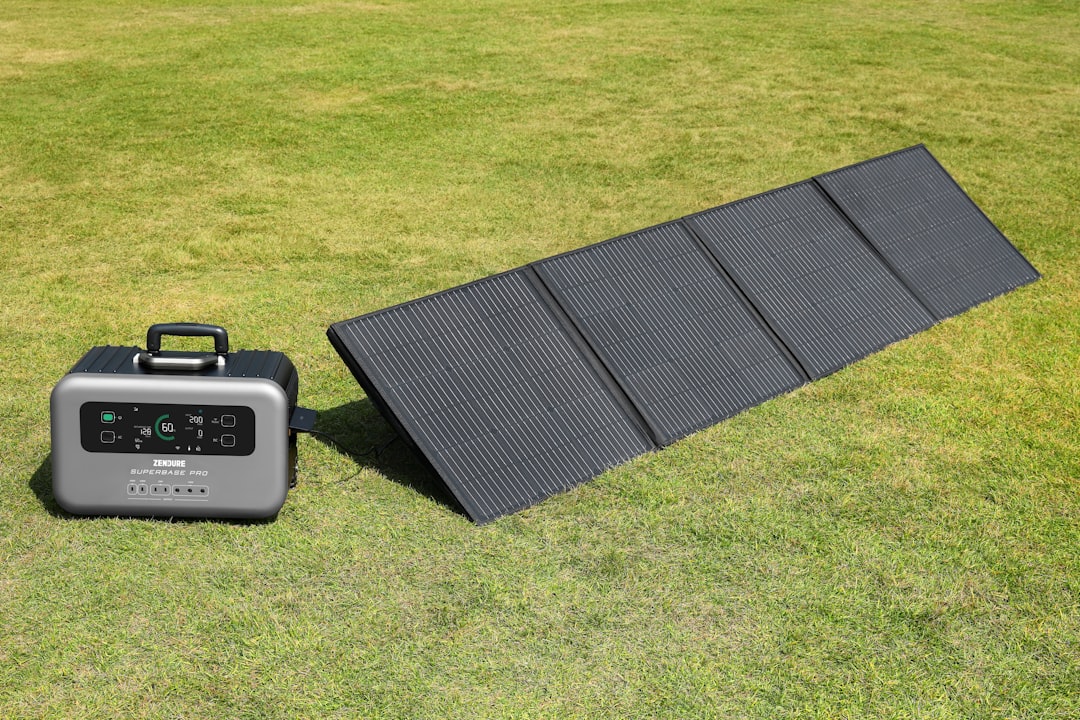
A solar battery converts excess electricity from your panels into stored chemical energy, then reverses that reaction to power your home when the sun isn’t shining. That’s the simple version. The reality involves electrochemical reactions, carefully managed discharge limits, and degradation patterns that will determine whether your battery lasts 5 years or 20. This guide from PowMr Community breaks down the science behind solar battery technology — the chemistry differences, the specs that actually matter, and why understanding them is the foundation of any smart energy storage decision.
How Solar Batteries Store Energy: The Fundamentals
Every solar battery stores energy through reversible electrochemical reactions. During charging, electrical energy from your solar panels forces ions to migrate from one electrode to another through an electrolyte, converting electrical energy into chemical potential. During discharge, those ions flow back, releasing electrical energy to power your loads. The specifics of how this works depend entirely on battery chemistry.
Think of it like a reservoir system. Your solar panels are the rain — they generate energy intermittently. The battery is the reservoir — it captures excess energy when production exceeds demand and releases it when demand exceeds production. The “dam” controlling flow in and out? That’s a combination of your charge controller, inverter, and battery management system (BMS) working together.
In lithium-ion batteries — the dominant technology for residential solar storage — lithium ions shuttle between a cathode (positive electrode) and an anode (typically graphite) through a liquid electrolyte. The cathode material is what defines the specific chemistry: lithium iron phosphate (LFP), nickel manganese cobalt (NMC), or other variants. Each cathode chemistry creates fundamentally different performance characteristics in safety, lifespan, energy density, and cost.
In lead-acid batteries — the older, established technology — the reaction involves lead plates and sulfuric acid electrolyte. Lead dioxide at the positive plate and sponge lead at the negative plate react with sulfuric acid during discharge, forming lead sulfate on both plates. Charging reverses this process. It’s simple, proven chemistry, but with significant performance trade-offs we’ll examine below.
The key metric for how efficiently a battery stores and returns energy is round-trip efficiency (RTE). Lithium-ion batteries — particularly LFP — typically achieve round-trip efficiency exceeding 90–95%, meaning for every 1,000 Wh of solar energy stored, you get 900–950 Wh back. Lead-acid batteries typically operate at 80–85% efficiency, losing 15–20% of stored energy as heat during the charge/discharge cycle. Over years of daily cycling, that 10–15% efficiency gap compounds into a significant amount of lost solar production.
Battery Chemistry Compared: Lithium-Ion NMC vs. LFP vs. Lead-Acid

The cathode material inside your solar battery determines almost everything about its real-world behavior — how long it lasts, how deeply you can discharge it, how safe it is in extreme heat, and how much usable energy it actually delivers. Three chemistries dominate the residential solar market, each with distinct strengths. The table below captures the critical specifications side by side.
| Specification | LFP (LiFePO₄) | NMC (LiNiMnCoO₂) | Lead-Acid (FLA/AGM/Gel) |
|---|---|---|---|
| Energy Density | 90–160 Wh/kg | 150–250 Wh/kg | 30–50 Wh/kg |
| Cycle Life (80% retention) | 3,000–6,000+ cycles | 1,000–2,000 cycles | 300–1,500 cycles |
| Recommended DoD | 80–100% | 80–90% | 50% |
| Round-Trip Efficiency | 92–98% | 90–95% | 80–85% |
| Thermal Runaway Risk | Very Low | Moderate | Low (but gas venting risk) |
| Nominal Cell Voltage | 3.2V | 3.6–3.7V | 2.0V |
| Weight (per kWh) | ~7–10 kg | ~5–7 kg | ~25–30 kg |
| Maintenance | None | None | Low–High (chemistry dependent) |
| Typical Lifespan | 10–15+ years | 8–12 years | 3–7 years |
| Upfront Cost per kWh | Moderate | Higher | Lowest |
LFP: The Solar Storage Standard
LFP batteries use lithium iron phosphate as the cathode material, providing a stable olivine crystal structure that experiences minimal stress as lithium ions shuttle in and out during cycling. This structural stability is why LFP delivers such exceptional cycle life — often 3,000 to 6,000 full cycles at 80% depth of discharge while retaining at least 80% of original capacity. The strong covalent bonds within the iron phosphate material also make LFP inherently resistant to thermal runaway, the dangerous overheating condition that can lead to fire in less stable chemistries.
The trade-off? Lower energy density compared to NMC. An LFP battery bank storing 10 kWh will be physically larger and heavier than an equivalent NMC bank. For a garage wall installation, that difference is negligible. For a tight utility closet, it might matter.
NMC: Higher Density, Shorter Life
NMC batteries use a cathode made from nickel, manganese, and cobalt — a layered structure engineered for maximum energy density. They pack more energy per kilogram, which is why NMC dominates the electric vehicle market where weight matters enormously. For stationary home storage where your battery sits on a wall or floor, that energy density advantage is less relevant.
NMC’s layered cathode structure is more prone to stress and micro-cracking during repeated cycling, which accelerates capacity fade. NMC batteries also have a lower thermal runaway threshold — they require more sophisticated thermal management to operate safely in hot climates. If you’re in Arizona, South Texas, or tropical regions, this matters for system design and installation location.
Lead-Acid: Still Viable, But Know the Limits
Lead-acid technology has been storing energy for over 150 years and remains the lowest-cost entry point for solar storage. Flooded lead-acid (FLA) batteries are the cheapest but require regular maintenance — checking electrolyte levels, adding distilled water, and ensuring proper ventilation to manage hydrogen gas venting during charging. Sealed variants (AGM and Gel) eliminate maintenance but cost more and have shorter lifespans.
The fundamental limitation of lead-acid is its relationship between depth of discharge and cycle life. A deep-cycle lead-acid battery regularly discharged to 80% might only deliver 500 cycles, while the same battery discharged to only 50% could achieve 1,200–1,500 cycles. This means you need roughly double the rated capacity to get the same usable energy as lithium — a 20 kWh lead-acid bank gives you about 10 kWh of usable energy if you want it to last. Lead-acid also suffers from the Peukert effect: higher discharge rates reduce available capacity, sometimes delivering as little as 60% of rated capacity under heavy loads.
The takeaway: If you’re building a daily-cycling solar storage system for energy independence, LFP is the standard choice for its combination of safety, cycle life, and lifetime value. If you need the lightest possible installation (marine, mobile), NMC has advantages. If budget is your primary constraint and you can accept the maintenance and shorter replacement cycles, lead-acid still works — but do the 10-year cost math before committing.
Understanding Depth of Discharge and Usable Capacity

The number on the spec sheet — “10 kWh capacity” — is not the amount of energy you can actually use. Depth of discharge (DoD) determines how much of that rated capacity is truly available before you start damaging the battery. Misunderstanding this single spec has led to more under-sized and prematurely failed battery systems than almost any other factor.
DoD measures the percentage of a battery’s total capacity that has been used. If you have a 10 kWh battery and draw 8 kWh before recharging, your depth of discharge is 80%. The remaining 2 kWh — the 20% buffer — stays in the battery to protect its internal chemistry from the stress of full depletion.
Here’s where chemistry makes a practical difference in your system sizing:
LFP batteries can be regularly discharged to 80–100% DoD without significant lifespan reduction. A 10 kWh LFP battery gives you 8–10 kWh of genuine usable energy. NMC batteries typically recommend 80–90% DoD for optimal lifespan. A 10 kWh NMC battery delivers 8–9 kWh of usable energy. Lead-acid batteries should not be discharged beyond 50% to maintain reasonable cycle life. A 10 kWh lead-acid bank gives you only 5 kWh of usable energy.
This is why system sizing based solely on rated capacity is misleading. If your home needs 20 kWh of stored energy for overnight use, you need approximately:
• A 22–25 kWh LFP bank (at 80–90% DoD)
• A 23–25 kWh NMC bank (at 80–90% DoD)
• A 40 kWh lead-acid bank (at 50% DoD)
The relationship between DoD and cycle life is not linear — it’s exponential for some chemistries. A battery manufacturer might rate their product at 15,000 cycles at 10% DoD but only 3,000 cycles at 80% DoD. Always check the specific DoD at which cycle life is rated; a “10,000 cycle” battery at 10% DoD is a very different product from a “3,000 cycle” battery at 80% DoD. Both can be accurate claims — but only one reflects how you’ll actually use the battery in a solar system.
Cycle Life, Degradation, and What to Expect Over Time
Every solar battery degrades. It’s not a question of if, but how fast and how predictably. Two distinct degradation mechanisms work simultaneously: cycle aging (degradation from charging and discharging) and calendar aging (degradation simply from the passage of time, regardless of use). Understanding both is essential to setting realistic expectations for your solar battery investment.
Cycle Aging: Wear From Use
Every charge/discharge cycle causes subtle physical and chemical changes to the battery’s electrodes. In LFP batteries, the stable olivine crystal structure minimizes this damage — which is why LFP cell cycle life typically reaches approximately 4,000 cycles at 1C charge/discharge rate, 100% DoD, at 25°C. In real-world solar applications, where C-rates are typically much lower (0.1–0.2C) and DoD is often partial, the actual cycling degradation is even slower.
NMC batteries degrade faster under cycling because their layered cathode structure is more susceptible to micro-cracking and structural degradation. Typical NMC cell cycle life ranges from 1,500–2,000 cycles under the same test conditions. At the pack level — where the weakest cell determines overall performance — real-world NMC pack lifespans are often estimated at 1,000–1,300 cycles after accounting for cell consistency variations and calendar aging.
Lead-acid cycle life depends heavily on discharge depth. At 50% DoD, quality deep-cycle lead-acid batteries can deliver 1,000–1,500 cycles. Push to 80% DoD regularly, and that number may drop to 500 cycles or fewer.
Calendar Aging: The Clock Is Always Ticking
Calendar aging is the degradation that occurs regardless of whether you’re using the battery. Chemical reactions at the electrode-electrolyte interface — particularly the growth of the solid electrolyte interphase (SEI) layer on the anode — consume active lithium and increase internal resistance over time. Calendar aging is accelerated by two factors: elevated temperature and high state of charge during storage.
For residential solar systems, calendar aging is arguably the more relevant degradation mechanism. Most home batteries cycle gently — partial depth of discharge at low C-rates — meaning the cycle aging contribution is relatively small. Some experienced solar system designers have observed that for LFP batteries in solar applications, calendar aging will likely degrade capacity before cycling wear does, especially if the battery is frequently held at or near 100% state of charge during sunny periods.
Degradation Patterns to Expect
Battery degradation doesn’t follow a single, predictable curve. Research has identified three common patterns in lithium-ion cells: a proportional decline (steady, linear fade), early fast decline followed by stabilization, and slow early decline followed by sudden rapid capacity loss (sometimes called “cycle plummet” or the “knee” in the degradation curve). The third pattern is the most dangerous because it appears the battery is aging gracefully until it suddenly isn’t.
The warranty threshold for most lithium-ion solar batteries is 60–80% capacity retention at end-of-life. A battery doesn’t stop working at that point — it simply holds less energy. A 10 kWh battery at 70% retention is effectively a 7 kWh battery. Plan your system around this gradual decline, and it won’t surprise you.
How Solar Batteries Charge and Discharge in Real Systems
A solar battery doesn’t operate in isolation. It’s one component in an integrated system where the charge controller, inverter, and BMS coordinate to move energy efficiently between your panels, battery, home loads, and (if grid-tied) the utility grid. Understanding this energy flow clarifies why system design matters as much as battery chemistry.
The Charging Process
Solar panels produce DC electricity at varying voltages and currents depending on sunlight intensity, temperature, and time of day. A charge controller — either MPPT (Maximum Power Point Tracking) or PWM (Pulse Width Modulation) — regulates this variable output into the specific voltage and current profile your battery needs.
MPPT controllers are significantly more efficient, converting excess voltage into additional current to maximize power harvest. In a 48V battery system with a 150V open-circuit solar array, an MPPT controller can capture 15–30% more energy than a PWM controller by continuously adjusting its operating point to match the panels’ maximum power output.
LFP batteries accept charge efficiently across their entire charging cycle — a full charge can often be completed in 2–4 hours under adequate solar input. Lead-acid batteries require a multi-stage charging process: bulk (fast charging to about 80%), absorption (slower charging at decreasing current), and float (maintenance voltage). That final absorption stage is notably inefficient, and a full lead-acid charge can take 8–10 hours — a serious limitation when you’re trying to capture maximum solar energy during a short window of peak sunlight.
Discharge and Load Management
When your home demands more energy than your panels are producing — evenings, cloudy days, overnight — the battery discharges through the inverter, which converts stored DC energy into the AC electricity your home uses. The inverter’s continuous power rating (measured in kW) determines how many appliances you can run simultaneously. A 5 kW inverter can power roughly 5,000W of loads at once; a 10 kW inverter handles heavier loads like central air conditioning or electric vehicle charging.
Peak or surge power is equally important. Motor-driven appliances — refrigerator compressors, well pumps, air conditioning units — draw several times their running wattage during startup. Your inverter needs to handle these short-duration surges without shutting down.
In grid-tied systems, the battery and grid work together: the battery handles peak demand and outages, while grid power fills gaps during extended cloudy periods or extreme loads. In off-grid systems, the battery is your sole energy reservoir — proper sizing for your climate, seasonal variation, and energy consumption patterns becomes critical for reliable 24/7 power.
Battery Management Systems and Thermal Considerations
The battery management system (BMS) is the electronic brain that determines whether your solar battery operates safely, efficiently, and lives up to its rated lifespan. A BMS continuously monitors voltage, current, and temperature across individual cells and makes real-time adjustments to protect the battery from conditions that would cause damage or dangerous failure.
What the BMS Actually Does
Cell balancing: In a battery pack containing multiple cells in series, individual cells will inevitably charge and discharge at slightly different rates due to manufacturing variations and aging. Without balancing, the weakest cell limits the entire pack’s performance. The BMS equalizes the state of charge across all cells to maximize total usable capacity.
Overcharge and over-discharge protection: The BMS prevents cells from exceeding safe voltage limits during charging or dropping below safe voltage during discharge. For lithium-ion cells, over-discharge can cause copper dendrite formation on the anode — a permanent defect that increases self-discharge and poses safety concerns. Overcharging can trigger exothermic reactions leading to thermal runaway.
Temperature monitoring and management: The BMS tracks temperatures throughout the pack and can restrict charging or discharging if temperatures move outside the safe operating window. Charging a lithium-ion battery below 0°C (32°F) can cause lithium plating on the anode — permanent damage that reduces capacity and increases failure risk. The BMS will block charging in these conditions, which is why some cold-climate installations include battery heaters.
System communication: The BMS communicates with your inverter using protocols like CAN bus, RS485, or Modbus, sharing real-time battery data so the inverter can adjust charge and discharge rates appropriately. Without this communication, your system can’t optimize performance or respond to changing conditions.
Why Thermal Management Matters
Heat is the primary enemy of battery longevity. Elevated temperatures accelerate both calendar aging and cycle aging, increasing the rate of parasitic chemical reactions that consume active lithium and grow the SEI layer. In lithium-ion batteries, calendar aging is accelerated by temperature and high state of charge — keeping a battery fully charged in a hot garage is one of the fastest ways to degrade it.
Residential battery thermal management ranges from passive (relying on natural air convection) to active (fan-cooled or, in some high-end systems, liquid-cooled). If you’re installing a battery in a location that regularly exceeds 35°C (95°F) — an un-air-conditioned garage in Houston, an outdoor wall in Phoenix, or a rooftop enclosure in São Paulo — active thermal management or conditioned indoor installation is strongly recommended.
LFP batteries have a meaningful advantage here: they operate safely at higher temperatures than NMC and are far less susceptible to thermal runaway. But “safely” doesn’t mean “optimally” — an LFP battery in a hot environment won’t catch fire, but it will degrade faster. The ideal operating temperature for most lithium-ion batteries is 15–25°C (59–77°F).
The quality of your BMS matters as much as the quality of your cells. A cheap BMS with poor cell balancing, slow fault response, or inadequate temperature monitoring can turn a good battery pack into a short-lived, unreliable one. When evaluating solar batteries, don’t just look at cell chemistry and capacity — ask about BMS features, communication protocols, and thermal management design.
Why Solar Batteries Are Essential Infrastructure, Not Optional Add-Ons
Solar panels without storage are a partial solution. They reduce your electricity costs during sunny hours, but the moment clouds roll in, the sun sets, or the grid goes down, panels alone can’t help you. A solar battery transforms a weather-dependent electricity discount into reliable, resilient energy infrastructure you control.
This isn’t theoretical. Hurricanes in Florida and Puerto Rico, ice storms in Texas, rolling blackouts in South Africa, and increasingly frequent extreme weather events globally are demonstrating that grid reliability is declining precisely when demand is rising. Electricity demand in the U.S. grew by almost 3% recently, capping nearly 9% expansion since 2021 — driven by AI data centers, electrification, and population growth. In some regions, this demand outpaces the infrastructure upgrades needed to maintain reliability.
A properly sized solar-plus-storage system provides:
Backup power during outages: When the grid fails, your battery seamlessly powers critical loads — refrigeration, lighting, communications, medical equipment. Without a battery, grid-tied solar systems are required to shut down during outages for safety reasons (anti-islanding protection).
Energy independence and cost control: By storing solar energy generated during the day and using it during expensive peak-rate evening hours, batteries let you avoid time-of-use utility pricing and reduce your dependence on increasingly expensive grid electricity.
Grid services participation: Virtual power plants (VPPs) allow battery owners to aggregate their stored energy and sell grid services — frequency regulation, peak demand reduction — back to the utility. This transforms your battery from a cost center into a potential revenue source.
Full energy system integration: Modern home energy systems are converging — solar generation, battery storage, EV charging, and heat pump operation all managed through a single intelligent system. The battery is the central hub that makes this integration work, smoothing demand spikes and time-shifting energy to maximize self-consumption.
Treating batteries as an optional accessory understates their role. For off-grid homes, batteries are the only energy reservoir — there is no fallback. For grid-tied homes in areas with declining reliability or unfavorable net metering policies, batteries are the infrastructure that makes solar pencil out financially and practically. At PowMr Community, we approach battery storage as a first-class design consideration, not an afterthought bolted onto a panel system.
Frequently Asked Questions About Solar Batteries
Understanding Battery Specs Before You Shop
You now understand the electrochemistry, the DoD math, the degradation patterns, and the system-level integration that determines whether a solar battery performs as promised or disappoints. This knowledge is your foundation for evaluating specific products with confidence — reading datasheets critically, comparing cycle life claims at the same DoD, and asking the right questions about BMS quality and thermal management.
Every home is different — your climate, energy consumption, roof orientation, grid reliability, and budget all change the optimal battery selection. A 13.5 kWh LFP battery is perfect for one household and completely wrong for another. The technical understanding you’ve built here ensures you can engage with installers and product specifications from a position of knowledge, not guesswork.
Want to dive deeper into specific system components? Explore our guides on how battery management systems work in solar applications and LFP vs. lead-acid battery comparisons for more detailed technical analysis. Have questions about sizing or selecting the right solar battery for your situation? Our team at PowMr Community is here to help.
Frequently Asked Questions
How long does a solar battery last?
Solar battery lifespan depends primarily on chemistry and usage. LFP (lithium iron phosphate) batteries typically last 10–15 years with 3,000–6,000 cycle life at 80% depth of discharge. NMC batteries last 8–12 years with 1,000–2,000 cycles. Lead-acid batteries last 3–7 years with 300–1,500 cycles depending on discharge depth. Real-world lifespan also depends on temperature, charge/discharge rates, and BMS quality.
What is depth of discharge and why does it matter for solar batteries?
Depth of discharge (DoD) is the percentage of a battery’s total capacity that has been used before recharging. It determines how much of your rated battery capacity is actually usable. LFP batteries can safely discharge to 80–100%, while lead-acid batteries should only be discharged to 50% to maintain lifespan. A 10 kWh lead-acid battery effectively provides only 5 kWh of usable energy, while a 10 kWh LFP battery provides 8–10 kWh.
What is the difference between LFP and NMC solar batteries?
LFP (lithium iron phosphate) batteries offer longer cycle life (3,000–6,000 cycles), superior thermal stability, lower thermal runaway risk, and lower cost per cycle — making them ideal for stationary solar storage. NMC (nickel manganese cobalt) batteries provide higher energy density (more storage per kilogram) but shorter cycle life (1,000–2,000 cycles) and higher thermal runaway risk. For home solar storage where weight isn’t critical, LFP is generally the better choice.
Do solar batteries degrade over time even when not being used?
Yes. Batteries experience both cycle aging (degradation from charge/discharge use) and calendar aging (degradation from time alone). Calendar aging is driven by chemical reactions at the electrode-electrolyte interface and is accelerated by high temperatures and high state of charge. For residential solar systems that cycle gently, calendar aging may actually be the dominant degradation mechanism rather than cycle wear.
What does a battery management system (BMS) do in a solar battery?
A BMS is the electronic controller that monitors and protects your solar battery. It performs cell balancing to equalize charge across cells, prevents overcharging and over-discharging, monitors temperatures throughout the pack, and communicates with your inverter for optimized operation. A quality BMS is essential for safety — it blocks charging below freezing to prevent lithium plating damage and disconnects the battery instantly if dangerous conditions are detected.
You must be logged in to post a comment.