The spec sheet wars are exhausting. Every battery brand claims the longest cycle life, the best round-trip efficiency, and the lowest cost per kWh. The honest picture is more nuanced — and the right choice depends almost entirely on your use case, climate, and integration architecture, not on which company has the best marketing budget.
This guide skips the platitudes and works through the engineering reality: what a solar battery actually does (and doesn’t do), how the three dominant chemistries compare on real degradation data, how to size a system using load-audit math, what you’ll actually pay in 2026, and how to read a warranty before it bites you. Whether you’re a homeowner evaluating your first solar-plus-storage quote or a DIY builder choosing between rack batteries and branded systems, the framework here applies.
What a Solar Battery Actually Does (and What It Doesn’t)
A solar battery stores electricity so you can use it at a different time than it was generated. That’s the complete job description. Everything else — backup power, bill savings, grid independence — is an outcome of that core function, applied to different scenarios.
Think of it like a water system: the battery’s kWh rating is reservoir size, and its kW rating is pipe diameter. A 13.5 kWh battery with a 5 kW continuous output can hold a lot of water, but only let it flow at a limited rate. You can run a refrigerator, lights, and a few circuits easily — but you can’t simultaneously power central air conditioning, a well pump, and an electric dryer on 5 kW. Matching reservoir size and flow rate to your load profile is the first engineering challenge most homeowners skip.
The Four Use Cases That Drive Different Sizing Logic
Time-of-use (TOU) arbitrage: Charge from solar during the day, discharge during peak-rate evening hours. Requires modest capacity (10–15 kWh for most homes) but daily cycling — which means cycle life matters more than peak power output.
Grid outage backup: Keep essential loads running for 8–24 hours when the grid goes down. Requires enough kWh for your critical circuits and enough kW to start large motor loads (well pumps, HVAC compressors). This surprises most homeowners: the limiting factor is usually kW rating, not kWh capacity.
Whole-home backup: Power everything — including HVAC, water heater, and EV charging — through a multi-day outage. Requires 20–40+ kWh and high continuous power output. Often requires multiple battery units.
Off-grid: No grid connection at all. The battery must store enough energy to bridge multiple consecutive cloudy days. Sizing is driven by days-of-autonomy math (detailed in the sizing section below), and the battery bank is typically 2–5× larger than a grid-tied system with the same daily load.
A battery cannot generate its own energy, eliminate your electricity bill on its own, or compensate for an undersized solar array. It also cannot run inductive loads (motors, compressors) at startup unless its peak/surge rating exceeds those startup currents — a spec that’s frequently buried in datasheets or omitted entirely from marketing materials.
Battery Chemistry Compared: LiFePO4 vs NMC vs Lead-Acid

Three chemistries dominate the residential solar storage market in 2026. The choice between them is fundamentally an engineering decision about cycle life, usable capacity, thermal behavior, and total cost of ownership — not a brand preference. Here’s the data.
| Metric | LiFePO4 (LFP) | NMC (Lithium-Ion) | Lead-Acid (AGM/Flooded) |
|---|---|---|---|
| Typical Cycle Life (80% DoD) | 3,000–6,000+ cycles | 1,000–3,000 cycles | 300–600 cycles |
| Usable Capacity (DoD) | 80–100% | 80–90% | 40–50% |
| Energy Density (Wh/kg) | 100–180 | 160–270 | 30–50 |
| Round-Trip Efficiency | 95–98% | 90–95% | 70–85% |
| Thermal Runaway Threshold | 270–310°C | 180–250°C | Not applicable (different failure modes) |
| Capacity Fade per Cycle | <0.05% | 0.1–0.2% | 0.2–0.5% |
| Cold Weather Performance (0°C) | –10 to –20% capacity | –5 to –10% capacity | –30 to –50% capacity |
| Maintenance Required | None | None | Regular (flooded); minimal (AGM) |
| Typical Calendar Life | 10–15 years | 8–12 years | 3–7 years |
| Upfront Cost (cell level, 2026) | $60–$80/kWh | $80–$100/kWh | $100–$150/kWh (usable) |
Why LFP Has Effectively Won the Residential Storage Market
Since 2021, lithium iron phosphate (LiFePO4/LFP) has become the dominant chemistry for stationary storage, accounting for 80% of newly installed residential battery capacity by 2023. The reason isn’t marketing — it’s physics.
The core advantage of LiFePO4 chemistry lies in its molecular structure. The phosphorus-oxygen bonds in its olivine structure are incredibly strong, making the battery chemically and thermally stable. This stability significantly reduces the risk of thermal runaway. LiFePO4 batteries can withstand higher temperatures before becoming unstable, with breakdown temperatures reaching 500–600°C compared to 180–250°C for NMC batteries, making LFP an inherently safer option for residential installations.
LiFePO4 dominates long-duration energy storage due to three key advantages: thermal resilience (operates safely up to 60°C without electrolyte breakdown), minimal capacity fade (loses less than 0.05% capacity per cycle versus 0.1–0.2% for NMC), and deep discharge tolerance.
The LiFePO4 vs. NMC debate for residential use is effectively over. Because Levelized Cost of Storage (LCOS) reflects lifetime throughput, LFP systems deliver significantly better long-term economics for homeowners and fewer warranty risks.
Where NMC Still Makes Sense
NMC’s higher energy density — typically 160–270 Wh/kg compared to 100–180 Wh/kg for LiFePO4 — matters when physical space is genuinely constrained. Wall-mounted batteries in tight utility closets, or apartment installations where every square inch counts, are legitimate NMC use cases. The original Tesla Powerwall used NMC chemistry partly for this reason.
The tradeoff: the layered structure of the NMC cathode is more prone to stress and micro-cracking during cycling, leading to faster capacity fade. IEA research confirms NMC batteries possess lifetimes of 1,000–2,000 cycles, whereas LFP batteries offer high durability with up to 2,000 full cycles or more for stationary applications. In warm climates, the gap widens further: at 45°C, LFP cycle life reduces by roughly 20–30% vs. 25°C test conditions. NMC is more sensitive to heat — at elevated temperatures, the cobalt-rich cathode degrades faster, and the risk of thermal runaway is higher than with LFP.
The Lead-Acid Reality Check
Lead-acid is not obsolete — it’s still a defensible choice for very specific scenarios: extremely budget-constrained off-grid builds, remote locations where shipping lithium batteries is prohibitively expensive, or temporary installations where longevity is irrelevant.
Everywhere else, the math doesn’t work. Lithium batteries provide 80–100% usable capacity versus 50% for lead-acid. Lead-acid batteries wear out in 3–5 years at around 2,000 cycles, making them the most expensive option over the long run despite a lower upfront cost. The real-world sizing implication: a 20 kWh nominal lead-acid bank delivers only ~10 kWh of usable energy, where a 13 kWh LFP bank delivers 10–12 kWh. You’re paying for nameplate capacity you can’t use.
One cold-weather caveat applies to LFP that often goes unmentioned: at 0°C, LFP battery capacity can drop by 10–20%, and at –20°C, performance falls to about 60% of normal. This makes LFP batteries less ideal for cold climates without thermal management. If you’re building in northern Canada, Alaska, or mountainous regions, verify that your chosen battery includes self-heating functionality — it’s available on premium LFP products and increasingly on mid-range units.
How to Size a Solar Battery: Load Audit and Days-of-Autonomy Math

Sizing a battery without a load audit is guessing. The most common mistake is picking a battery based on what a neighbor has, or matching the panel wattage instead of the actual daily energy consumption. Here’s the systematic approach.
Step 1: Build a Load Table
List every appliance in your home, its wattage, and how many hours per day it runs. Your load audit must track two things simultaneously: energy consumption (Wh/day), which determines battery bank and solar array size, and peak power demand (W), which determines inverter size. You could have low daily energy use (2 kWh/day) but still need a large inverter if you occasionally run a 3,000-watt well pump.
Use your utility bill as a cross-check: use your electric bill to find monthly kWh usage, then divide by 30 to get daily usage in watt-hours. If you’re in a climate with significant seasonal variation, perform the audit twice — once for summer (AC loads) and once for winter (heating loads and reduced solar generation) — then design for the worst case.
Step 2: Determine Days of Autonomy
Days of autonomy is the number of consecutive days your battery bank must power your home without solar recharge. The right number depends on your use case and climate:
Most residential systems are designed for 1–3 days of autonomy, while off-grid systems often require 3–5 days. Two days is the minimum for lithium battery systems, while the less efficient lead-acid batteries are generally sized for three or more days.
For grid-tied backup: aim for 1–2 days of essential-load coverage. For full off-grid in a region with frequent cloudy periods: plan for 3–5 days. Smart sizing involves load shedding strategies — prioritizing critical loads (lighting, refrigeration, communications) for full autonomy while shedding discretionary loads after day one. This approach can reduce battery costs by 20–40% while maintaining system reliability.
Step 3: Run the Math
The core sizing formula:
Required Battery Capacity (kWh) = Daily Load (kWh) × Days of Autonomy ÷ DoD ÷ Round-Trip Efficiency
Two worked examples:
Example A — Grid-tied backup for essential circuits (10 kWh/day essential load):
Target: 1.5 days autonomy | LFP at 90% DoD | 97% RTE
= 10 × 1.5 ÷ 0.90 ÷ 0.97 ≈ 17.2 kWh nominal
One Tesla Powerwall 3 (13.5 kWh) covers reduced essential loads. Two covers the full calculation.
Example B — Off-grid home (25 kWh/day average):
Target: 3 days autonomy | LFP at 85% DoD | 96% RTE
= 25 × 3 ÷ 0.85 ÷ 0.96 ≈ 92 kWh nominal
With an average home using 10–15 kWh over a whole day, off-grid systems require a much larger, more expensive 30–60 kWh battery system, depending on the days of autonomy required and solar array size. At 25 kWh/day, expect 80–100 kWh of storage — roughly 6–8 server-rack batteries at 48V/100Ah each.
It’s standard practice to add a buffer of 15–20% to your total energy needs to compensate for inherent system losses. Don’t skip this step — inverter inefficiencies, wiring losses, and temperature derating are real and stack up.
The Usable kWh vs. Nameplate kWh Problem
This is where the spec sheet wars cause real confusion. A battery marketed as “10 kWh” may deliver significantly less usable energy depending on its DoD limit and efficiency. A 10 kWh battery with a 70% end-of-life guarantee means the battery should still deliver at least 7 kWh of usable energy after 10 years of use. Your 10 kWh battery will not always give you 10 kWh over its lifespan. After 8–10 years, you may only get 6–8 kWh of usable energy per cycle. Size to what you need at end of warranty, not at day one.
Solar Battery Costs in 2026: What You’ll Actually Pay ($/kWh Breakdown)

The installed cost of a residential solar battery in 2026 ranges from roughly $550/kWh to over $1,200/kWh depending on chemistry, brand, system size, and installation complexity. The gap is real and knowing where you fall on that range before talking to installers is worth the 10 minutes it takes to understand the cost drivers.
| Cost Layer | DIY / Direct China (LFP) | Mid-Tier (EG4, Generic LFP) | Brand-Name (Tesla, Enphase, Generac) |
|---|---|---|---|
| Cell / hardware cost ($/kWh) | $60–$85/kWh | $85–$160/kWh | $200–$350/kWh |
| Installed system cost ($/kWh) | $300–$500/kWh (DIY labor) | $550–$750/kWh | $700–$1,200/kWh |
| Typical 10–14 kWh system (installed) | $4,500–$7,000 | $7,000–$11,000 | $10,000–$18,000 |
| Inverter add-on (if not included) | $800–$2,000 | $1,000–$2,500 | Often bundled |
| Panel upgrade / electrical work | $500–$2,000 | $500–$2,000 | $500–$3,000 |
| Permit & inspection | $300–$1,000 | $300–$1,000 | $300–$1,000 |
Based on data from BloombergNEF and Wood Mackenzie, lithium battery pack costs are projected to drop 8–12% year over year, reaching approximately $550–$850 per usable kWh installed by late 2026.
Brand-name NMC/Li-ion systems from Tesla, Enphase, and Generac: expect around $700–$1,200 per kWh installed. LFP cells now range from $60 to $80 per kWh at the cell level, whereas NMC cells remain higher at $80 to $100 per kWh.
The Channel Price Reality
Where you buy matters as much as what you buy. Price drops depend on which channels the batteries are being sold through: ~$85/kWh building yourself or buying large floor-mounted direct from China; ~$160/kWh for mid-tier Amazon and eBay brands; ~$225/kWh for name-brand expensive batteries.
The 30% federal Investment Tax Credit (ITC) applies to qualifying residential battery installations. The Residential Clean Energy Tax Credit covers 30% of eligible expenditures for systems placed in service from 2022 through 2032. Battery storage technologies qualify if the system has at least 3 kWh of capacity. For example, a battery with a pre-credit cost of $15,228 could receive a tax credit of roughly $4,568, significantly lowering the effective net cost.
Installing a battery at the same time as your solar panels saves money — the electrical work overlaps, and you’re not paying two separate mobilization fees. Retrofitting a battery onto an existing system costs 10–20% more due to additional wiring.
Integration Paths: Grid-Tied, Hybrid, and Off-Grid Battery Systems
How your battery connects to the solar array and grid determines what it can do, which inverters are compatible, and what happens during a grid outage. These three architectures have meaningfully different performance and cost profiles.
Grid-Tied with AC-Coupled Battery
Your existing solar inverter stays in place. The battery connects on the AC side of the system through its own bidirectional inverter. This is the retrofit-friendly path — a Powerwall can retrofit an existing home solar system because it’s an AC-coupled battery. In this case, a homeowner will usually have a few different brands making up their solar power system.
The tradeoff: AC-coupling involves two energy conversion steps (DC→AC→DC→AC), reducing round-trip efficiency slightly. Tesla Powerwall 3 achieves 97.5% round-trip efficiency through its integrated DC-coupled solar inverter design. Enphase IQ 5P and FranklinWH aPower 2 both rate at 89% efficiency due to AC-coupling. The 8–9% difference in efficiency compounds over years of daily cycling.
Hybrid (DC-Coupled) System
A single hybrid inverter handles both solar charging and battery management. The solar array connects directly to the battery on the DC side, which is more efficient. A PWRcell can only be added to a new solar system or existing Generac inverter systems because it is a DC-coupled battery. This is the dominant architecture for new builds — most EG4 and Generac installations are DC-coupled hybrid configurations.
Hybrid systems also enable a capability AC-coupled systems can’t easily match: the battery can charge from solar even when the grid is down, allowing indefinite operation on solar-plus-storage in an outage. AC-coupled systems typically require the grid as a reference signal to operate, though some newer designs (like certain Enphase configurations) have improved island-mode functionality.
Off-Grid Systems
No grid connection. The battery is the grid. Sizing is unforgiving — there’s no utility backup if the bank runs low. After estimating average daily loads in kWh, you determine the number of days of autonomy. A general guide is two days for lithium battery systems, while less efficient lead-acid batteries are generally sized for three or four days.
Off-grid systems almost always pair with a backup generator for extended cloudy periods and for battery equalization. A backup generator reduces the required battery size significantly. The engineering goal is usually to minimize generator runtime to 1–3 hours per week during worst-case winter conditions — not eliminate it entirely.
For international and remote users in the Philippines, Latin America, or sub-Saharan Africa where grid reliability is poor but a complete off-grid setup may be oversized, a hybrid with generator backup is often the most cost-effective path: connect to the grid when available, operate island-mode on solar-plus-storage as the primary source, and fall back to a generator for multi-day low-sun events.
The Brand Landscape: Tesla, EG4, Generac, SimpliPhi, and the China Direct Question
| Brand / Platform | Chemistry | Capacity | Continuous Power | Round-Trip Efficiency | Installed Cost (est.) | Best For |
|---|---|---|---|---|---|---|
| Tesla Powerwall 3 | NMC (Li-ion) | 13.5 kWh | 11.5 kW | 97.5% | $10,000–$13,000 | Grid-tied retrofit, high-power homes, AC-couple simplicity |
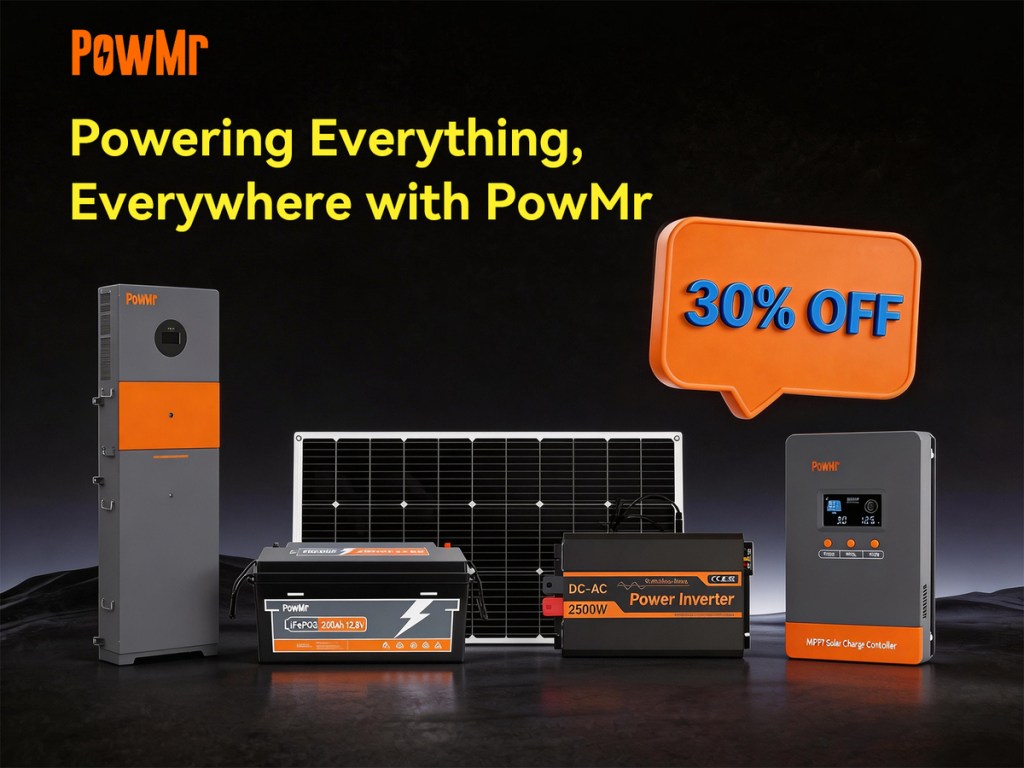
| PowMr | LiFePO4 (LFP) | 5.12–15 kWh+ (Scalable) | 5 kW (Per Inverter) | 95–98% | $180–$260/kWh (Hardware) | High-value DIY, small-to-midscale off-grid, global budget-conscious users |
| Generac PWRcell 2 | Li-ion (NMC/LFP) | 9–18 kWh (modular) | 7.6–10.5 kW | 96.5% | $15,000–$20,000 | Modular expansion, generator integration, whole-home backup |
| EG4 LifePower4 / WallMount (LFP) | LiFePO4 | 5.1–14.3 kWh per unit (stackable) | 5–6 kW (per inverter) | 95–99% | $230–$320/kWh (hardware) | DIY, off-grid, cost-conscious installers, scalable rack builds |
| SimpliPhi (Briggs & Stratton) | LiFePO4 | 3.8–6.65 kWh per module | Up to 10.65 kW (2-stack) | 98%+ | ~$9,300 for 13.3 kWh hardware | Premium US-built, off-grid, wide inverter compatibility |
| China-direct LFP (Yixiang, EVE, CATL cells) | LiFePO4 | 5–100 kWh (custom) | Varies | 95–98% | $85–$160/kWh (hardware) | DIY builders, price-first off-grid, international markets |
No brand is right for every situation. The honest picture requires naming the tradeoffs — not picking a winner.
Tesla Powerwall 3
The Tesla Powerwall 3 offers a continuous power output of 11.5 kW, 13.5 kWh capacity, and 97.5% efficiency with seamless integration. That 11.5 kW continuous output is genuinely exceptional — it’s the highest among the four major residential systems. This translates to approximately 48 amps at 240 volts, enough to simultaneously run central air conditioning, a refrigerator, lights, and other household loads during an outage. The 30 kW peak power rating handles high-surge appliances like well pumps or multiple air conditioners starting at once.
The limitation: the Powerwall 3 comes in rigid 13.5 kWh blocks. If you need just a little more power (say, 15 kWh total), you have to buy a second, full $10,000+ unit. It forces you to overspend. It’s also AC-coupled with non-Tesla solar inverters, which introduces the efficiency penalty described above. Best fit: grid-tied homeowners in suburbia who want a polished, app-driven system and don’t need modular expansion.
PowMr
The PowMr Lithium Battery collection—featuring 48V wall-mounted and rack-mounted LFP units—has earned a strong reputation among DIYers and off-grid enthusiasts who prioritize the bottom line. Their core value proposition is lowering the entry barrier for high-performance LiFePO4 storage. By leveraging a vertically integrated supply chain, PowMr delivers hardware at a price point of $180–$260/kWh, significantly lower than Tier-1 residential brands, while maintaining essential features like 6,000+ deep-cycle ratings and integrated smart BMS.
The PowMr Advantage:
- Aggressive Pricing: It serves as the “sweet spot” for users who want costs close to raw cell prices but require the safety and convenience of a finished, warrantied product.
- Protocol Flexibility: While PowMr offers its own ecosystem of inverters, their batteries are engineered for broad compatibility with major third-party inverter brands.
- Scalability: From 5.12kWh wall units to stackable energy cubes, the systems are designed for modular growth, making them ideal for users starting small and expanding over time.
The Tradeoff: Unlike “white-glove” providers like Tesla or Generac, PowMr is a hardware-centric brand. It is designed for those who are comfortable managing their own system design or working with independent installers. You aren’t paying for a massive corporate marketing department; you are paying for the raw capacity and the cycle life.
Best fit: Smart shoppers looking for reliable LFP hardware and the highest possible ROI for off-grid or hybrid solar projects.
Generac PWRcell 2
The PWRcell 2 offers impressive modularity, allowing capacity expansion from 9 kWh to 18 kWh in 3 kWh increments. With 96.5% round-trip efficiency, it matches or exceeds most competitors while providing excellent generator integration — a natural fit given Generac’s leadership in backup power systems.
If you have a Generac home standby generator, the PWRcell integrates seamlessly — creating a solar-plus-battery-plus-generator combination that can sustain a home indefinitely through extended outages. This is a differentiating capability that no other major residential system matches as cleanly. The tradeoff: DC-coupling means it works best in new installations or with an existing Generac inverter. Generac’s reputation took hits during the Pink Energy bankruptcy situation, but the company has stood behind their warranties and improved their products significantly. Still, some installers remain cautious about long-term support.
EG4 Electronics
EG4 is the brand the residential solar industry “can’t stop talking about,” and the trajectory is real: EG4 and its parent company Energy Access Innovations were created in rural Sulphur Springs, Texas, by CEO James Showalter, who started his solar journey in the DIY community, installing a fully off-grid system on his family’s home in 2013. That origin matters — the products are designed from the ground up for off-grid and hybrid use cases that most grid-tied-first manufacturers retrofit poorly.
EG4 batteries offer some of the lowest cost per kWh in the market, with the WallMount 280Ah model at around $230.70/kWh. With 6,000–8,000+ charge cycles at 80% depth of discharge and 10-year warranties, EG4 batteries are designed to provide 15–20 years of reliable service.
EG4 opened a 310,000 sq. ft. manufacturing facility in Commerce, Texas, and acquired U.S. off-grid solar manufacturer OutBack Power. The company also formed a supply partnership with LG Energy Solution to purchase 13.5 GWh of Michigan-made battery cells through 2030 for assembly at its Commerce facility. The early-generation UL certification concerns have been largely addressed in current models. The honest caveat: EG4 is primarily a DIY and installer-market brand — support is strong in those channels, but less so for homeowners expecting a white-glove installation experience.
SimpliPhi (Briggs & Stratton)
Briggs & Stratton’s PHI and AmpliPHI battery lines provide reliable LFP energy storage for residential applications. The AmpliPHI 3.8 features integrated BMS with closed-loop communications and 15-year warranty coverage. These battery systems utilize cobalt-free LFP chemistry that operates reliably from –4°F to 140°F while maintaining 10,000+ cycle life ratings. Compatible with industry-standard inverter charge controllers, all models support solar, wind, grid, and generator power sources.
SimpliPhi is the premium American-made choice — built for users who prioritize longevity, inverter agnosticism, and domestic manufacturing over lowest upfront cost. The 15-year AmpliPhi warranty is among the longest in the residential market. It’s notably more expensive than Chinese alternatives at equivalent kWh, but for off-grid homesteaders who plan to own a system for 20+ years without wanting to replace batteries twice, the per-cycle economics can justify it.
The China Direct Question
Buying LFP cells or assembled batteries direct from Chinese manufacturers (CATL, EVE, or resellers) offers the lowest hardware cost — but shifts responsibility for integration, BMS configuration, and warranty support entirely to the buyer. The biggest draw of EG4 has been the low prices. “Their 14-kWh battery hit the market at one-third of the price-per-kWh of the one I was selling prior to that.” The quality of Chinese LFP cells from tier-1 manufacturers (CATL, EVE, REPT) is now genuinely good — but “tier-1 cells in a well-built pack with a competent BMS” is a very different product from a bargain-bin assembled unit with unknown cell sourcing.
For experienced DIY builders who understand BMS programming, cell balancing, and electrical code compliance (NEC 690 for solar systems), direct sourcing can cut hardware costs by 50–60% versus branded systems. For anyone else, the risk-adjusted math usually favors a mid-tier brand with domestic warranty support.
Warranty Fine Print and What the Spec Sheets Hide
The “10-year warranty” headline is almost meaningless without reading the actual document. Battery warranties are the most complex in the solar equipment stack, and the gaps between what’s advertised and what’s actually covered create real financial exposure.
The Triple Limit Problem
Most residential battery warranties run 10 years, but they are conditional — structured as “10 years or X MWh throughput or Y cycles, whichever comes first.” A high-usage household cycling their battery daily may exhaust the throughput limit years before the calendar term expires. Typical throughput warranties range from approximately 20 to 43 MWh depending on the product; capacity retention at end-of-warranty is usually guaranteed at 70–80% of original usable capacity.
Here’s the math on why throughput limits matter: a 10 kWh battery cycling once per day passes 3,650 kWh per year through the battery — 36.5 MWh over 10 years. If the warranty covers only 30 MWh, you will reach the limit in 8.2 years if you use 10 kWh a day. You’re no longer covered two years before the clock runs out.
End-of-Warranty Capacity: The 70% Floor
Most warranties guarantee only 60–70% capacity retention after 10–15 years of use. This degradation occurs naturally and doesn’t trigger warranty replacements. A 10 kWh battery at 70% end-of-warranty capacity delivers 7 kWh. If you sized for 10 kWh of usable storage, you’re undersized by 30% in year 10. If you need a certain amount of backup energy for off-grid use, you should oversize your battery bank upfront to account for future capacity fade.
Hidden Warranty Killers
Batteries must be operated within the manufacturer’s specified temperature band (typically –4°F to 122°F for systems like the Tesla Powerwall 3), installed by a certified installer, and in some cases kept within a minimum weekly full-charge cycle for cell balancing.
Other common warranty killers that rarely appear in sales presentations:
Non-approved inverter pairing: Batteries are not universally compatible with all inverters. Using a non-approved inverter can void the warranty immediately. Always check the manufacturer’s official compatibility list.
Labor and shipping exclusions: While some premium warranty packages may include labor and shipping for replacements, many standard warranties do not. A “covered” battery replacement can still cost $1,500–$3,000 in labor if those costs aren’t included.
Registration deadlines: Module, inverter, and battery manufacturers typically require product registration through an online portal within a specified window after commissioning. Enphase, for example, conditions warranty validity on registration and internet connectivity within 45 days of the warranty start date.
Coastal/marine exclusions: Saltwater corrodes casings around battery systems, so some manufacturers will void a warranty if their products are within a certain distance of saltwater environments.
Company longevity: When comparing warranties, consider: how old is the company providing the warranty? Is it a bankable company, and does it have insurance policies or an escrow to ensure its warranties will be upheld even if it goes out of business? The Pink Energy bankruptcy — which left thousands of Generac customers with warranty questions — is a recent and instructive example.
The minimum warranty checklist before signing anything: years covered (10+), throughput limit (30 MWh+ for a 10 kWh battery), cycle count (5,000+), end-of-warranty capacity floor (70%+), labor inclusion (explicit), and installer certification requirement (verify your installer qualifies).
Frequently Asked Questions
See below for answers to the most common questions about sizing, chemistry, costs, and compatibility.
Your Next Step: Match Battery Chemistry to Your Use Case
The decision framework isn’t complicated once you strip away the marketing: LFP for daily cycling, long service life, and warm climates; NMC where physical space is genuinely the binding constraint; lead-acid only where upfront budget and remote logistics make lithium genuinely impractical. On the brand side, Tesla Powerwall 3 for AC-coupled retrofit simplicity and maximum power output; EG4 for cost-conscious DIY and off-grid builds; Generac PWRcell 2 for modular expansion and generator integration; SimpliPhi for premium domestic manufacturing and wide inverter compatibility; China-direct only if you have the technical depth to own the integration.
Before any purchase, run the load audit, check the throughput math on the warranty, verify your inverter compatibility, and get three installer quotes with explicit line items for labor, permits, and electrical upgrades. The numbers will tell you which system actually fits your situation.
At PowMr Community, we work through exactly this kind of system design analysis with homeowners, DIY builders, and international users facing unreliable grids every day. If you’re comparing quotes, trying to validate a sizing calculation, or figuring out whether your existing solar array can work with a battery retrofit, our community and team are here to help you think through the engineering details — no sales pressure, just technically grounded guidance. Connect with the PowMr Community to get started.
Frequently Asked Questions
How many kWh of battery storage do I need for a typical home?
It depends on your use case. For time-of-use arbitrage or essential-circuit backup (refrigerator, lights, Wi-Fi), 10–15 kWh covers most homes. For whole-home backup through a 24-hour outage, plan for 20–30 kWh. For off-grid with 3 days autonomy and 15 kWh/day average consumption, you’ll need 50–60 kWh of usable storage. Always start with a load audit — calculating your actual daily kWh usage — before picking a battery size.
Is LiFePO4 (LFP) really better than NMC for home solar storage?
For daily cycling in a residential solar application, yes — LFP is the better choice for most homeowners. It offers 3,000–6,000+ cycles versus 1,000–3,000 for NMC, loses less than 0.05% capacity per cycle versus 0.1–0.2% for NMC, and has a thermal runaway threshold of 270–310°C versus 180–250°C for NMC. The only scenario where NMC has a genuine advantage is when physical space is severely constrained, since NMC has higher energy density (160–270 Wh/kg vs. 100–180 Wh/kg for LFP).
What does the 30% federal tax credit cover for solar batteries in 2026?
The Residential Clean Energy Tax Credit (ITC) covers 30% of the total installed cost of a battery storage system, including equipment and labor, for systems placed in service from 2022 through 2032. The battery must have at least 3 kWh of capacity to qualify. The credit applies whether the battery is installed with a new solar system or retrofitted onto an existing one. Always consult a tax professional for your specific situation, as credit eligibility can depend on how and when the system is commissioned.
What hidden factors can void a solar battery warranty?
Several conditions that rarely appear in sales presentations can void battery warranties: operating outside the manufacturer’s specified temperature range (typically –4°F to 122°F), using a non-approved inverter, failing to register the product within the required window after installation, exceeding the throughput limit (total MWh cycled through the battery), installation by a non-certified installer, and in some cases, proximity to saltwater environments. Always read the full warranty document — not just the marketing summary — before purchase.
Can I add a battery to my existing solar system?
Yes, in most cases. The two main paths are AC-coupled batteries (like Tesla Powerwall 3 or FranklinWH), which connect on the AC side and work with nearly any existing solar inverter, and DC-coupled hybrid inverter replacements (like EG4 or Generac PWRcell), which replace your existing inverter and offer higher efficiency but require more electrical work. Retrofitting costs 10–20% more than installing solar and battery together, and some older systems may require electrical panel upgrades adding $500–$2,000. Get a detailed quote that itemizes inverter upgrades, panel work, permitting, and labor separately.
You must be logged in to post a comment.