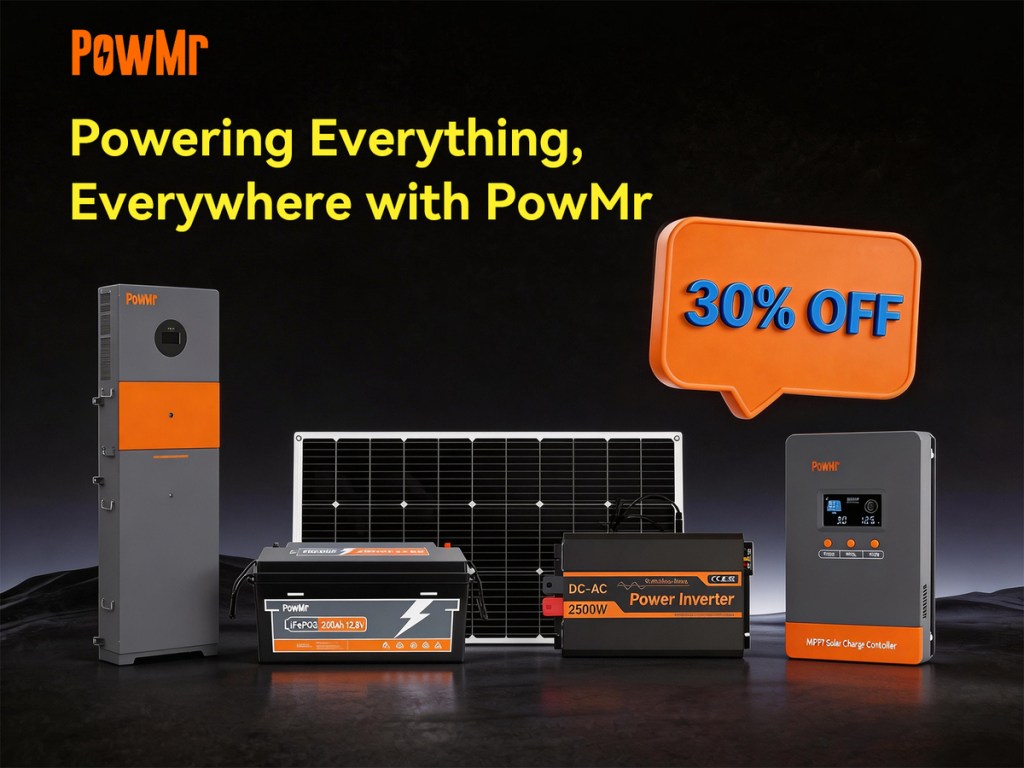
Solar battery storage connects to your panels one of two ways—AC-coupled or DC-coupled—and that single design choice ripples through your system’s efficiency, installation cost, and payback period. Neither architecture is universally better. The right one depends on whether you already have panels, how you’re billed for electricity, and what you’re trying to accomplish. This guide gives you the engineering reality without the sales pitch.
What Is Solar Battery Storage and How Does It Work?
Solar battery storage captures excess electricity your panels generate during the day and holds it for later use—at night, during a grid outage, or during expensive peak-rate hours. The core principle is straightforward: without a battery, a standard grid-tied solar system goes completely dark during a blackout, even on a sunny day, because grid-tied inverters are required by law to shut down when utility power fails.
Here’s the fundamental electrical reality you need to understand before anything else: solar panels generate DC (direct current) electricity. Batteries store DC electricity. But your home’s appliances and the utility grid run on AC (alternating current). Every solar battery storage system has to manage this conversion challenge—and the way it does so is exactly what separates AC-coupled from DC-coupled designs.
The Energy Flow in a Storage System
At its simplest, energy in a solar-plus-storage system moves through four possible states: generated at the panel, stored in the battery, consumed by your home, or exchanged with the grid. Different panels, inverters, and batteries make up a system, and all systems are either AC-coupled or DC-coupled—meaning the path electricity travels after leaving the solar panels defines the architecture of everything else.
A battery only stores DC, and your home only uses AC. So every stored watt has to be converted at least once on the way in and once on the way out. The debate between AC and DC coupling is really a debate about how many times that conversion happens—and those extra conversion steps carry real efficiency and cost consequences.
Beyond efficiency, storage systems unlock financial value that varies significantly depending on your utility’s rate structure. In areas where net metering export credits have dropped—like California under NEM 3.0—battery storage has become nearly mandatory to get reasonable value from solar panels. In regions with time-of-use (TOU) rates, storage lets you charge during cheap daytime solar hours and discharge during expensive evening peaks, turning rate arbitrage into a reliable savings engine.
AC-Coupled vs DC-Coupled Systems: Key Differences
The table below cuts through the noise. Both architectures achieve the same goal—storing solar energy for later use—but through fundamentally different electrical paths, with distinct trade-offs in efficiency, cost, and installation complexity.
| Feature | AC-Coupled | DC-Coupled |
|---|---|---|
| Energy path to battery | DC → AC (solar inverter) → DC (battery inverter) → stored | DC → charge controller → stored directly |
| Conversion steps (charge + discharge) | 3 conversions total | 1 conversion (at discharge only) |
| Typical round-trip efficiency | 90–94% | 95–98% |
| Inverter setup | Separate solar inverter + separate battery inverter | Single hybrid inverter manages everything |
| Hardware cost | Higher (two inverters) | Lower for new builds (one hybrid inverter) |
| Retrofit compatibility | Excellent — add a battery without replacing existing inverter | Difficult — usually requires replacing the solar inverter |
| Grid-charging capability | Yes — battery can charge from both solar and grid | Typically solar-charge only (grid-charging varies by inverter) |
| Off-grid suitability | Limited — most AC-coupled units are not designed for off-grid use | Strong — purpose-built for off-grid and hybrid systems |
| Clipped solar recovery | No — cannot capture power above inverter AC limit | Yes — oversized arrays can divert clipped power directly to battery |
| System redundancy | Higher — two independent inverters; one can fail without killing both | Lower — hybrid inverter is a single point of failure |
| Best use case | Retrofit storage on existing solar; grid-tied homes needing flexibility | New solar + storage installations; off-grid; maximum efficiency |
| Example products | Tesla Powerwall, Enphase IQ Battery, SonnenBatterie | Most hybrid inverter systems (SolarEdge, Growatt, PowMr hybrids) |
Why Efficiency Differences Are Larger Than They Look
AC-coupled systems typically achieve an efficiency of 90–94%, compared to 98% for DC systems. That 4–8% gap may sound minor on paper, but consider this: if your battery cycles daily for 10 years, those losses accumulate into hundreds of kilowatt-hours of electricity you paid to generate but never got to use. In AC-coupled systems, electricity stored in the battery must be inverted three times before use—DC to AC at the solar inverter, back to DC at the battery inverter for storage, then DC to AC again when you draw power. Each conversion carries a small loss.
DC-coupled systems involve only one conversion to power your home from the battery, which is why their round-trip efficiency is significantly higher. When charging directly from solar, DC-coupled systems achieve 95–98% efficiency thanks to single-stage DC-to-DC conversion.
Understanding Battery Storage System Components

Before you can evaluate which coupling architecture fits your home, you need to understand what’s inside both types of systems. The key components are the same; it’s how they’re connected and combined that changes.
The Solar Inverter
In an AC-coupled setup, your existing solar inverter converts DC power from the panels into AC electricity for immediate home use or grid export. It does not communicate with the battery—that’s a separate inverter’s job. In a DC-coupled setup, this role is absorbed by the hybrid inverter, which simultaneously handles DC input from panels, DC charging of the battery, and AC output to your home.
The Hybrid Inverter (DC-Coupled Systems)
The hybrid inverter is the brain of a DC-coupled system. A hybrid inverter doesn’t just convert—it coordinates conversion based on your home’s current power needs, battery status, and grid conditions. It manages energy priority in real time: power your home first, then charge the battery, then export to the grid (or some combination, depending on how it’s programmed). Hybrid inverters are designed for both battery backup and grid interaction, making them the most versatile single component in a modern solar-plus-storage system.
The MPPT Charge Controller
Maximum Power Point Tracking (MPPT) is the technology that ensures your panels always operate at their highest-efficiency electrical operating point, regardless of temperature or shading conditions. The MPPT charge controller constantly scans these conditions, adjusts the electrical load, and ensures the system squeezes every possible watt out of your panels. In DC-coupled systems, the MPPT function is built into the hybrid inverter. In AC-coupled systems, the original solar inverter handles MPPT for the panels, while the battery inverter handles grid synchronization separately. MPPT controllers can optimize power output from the panels, resulting in up to 30% more energy harvested compared to older PWM models.
The Battery Bank
Lithium Iron Phosphate (LiFePO4) batteries are a leading choice for residential systems due to their long cycle life, inherent safety, and high efficiency. LiFePO4 batteries typically deliver 4,000–7,000 charge-discharge cycles, translating to a practical lifespan of 10–15 years or more. For sizing reference, most U.S. homes consuming 25–30 kWh per day need 10–15 kWh of battery storage for overnight backup when paired with solar panels, or 20–30 kWh for extended outage protection.
The Battery Management System (BMS)
The BMS is the battery’s internal guardian. A well-designed BMS protects battery cells from over-voltage, under-voltage, and extreme temperatures. The BMS also manages cell balancing across the pack, which is critical for both performance and longevity. In modern hybrid systems, the hybrid inverter constantly communicates with the BMS—without this communication, batteries would degrade faster, run hotter, and potentially become unsafe. This communication typically happens over standardized protocols like CAN bus or RS485, allowing the inverter to adjust charging current in real time based on the battery’s exact state of charge and temperature.
The Automatic Transfer Switch (ATS)
The ATS is what makes your backup power seamless. When the grid fails, the ATS disconnects your home from utility lines and switches power to battery-backed circuits—typically within milliseconds. This both keeps your appliances running and prevents your system from energizing downed utility lines, which is a critical safety requirement. Systems without an ATS (or a hybrid inverter with built-in transfer switching) will not provide automatic backup power during outages.
When Does Solar Battery Storage Make Financial Sense?
Battery storage makes strong financial sense when your utility’s rate structure creates a meaningful spread between what you pay for grid power and what you’d receive (or save) by using stored solar. It makes weaker financial sense when flat-rate electricity is cheap and net metering is generous. Here’s how to assess your situation honestly.
Scenarios Where Storage Pencils Out Well
Time-of-use (TOU) rate structures: If your utility charges significantly more during evening peak hours (often 4–9 PM) than during the day, a battery lets you store cheap solar electricity and discharge it during the expensive window. With a peak rate of $0.45/kWh and off-peak of $0.20/kWh, a 13.5 kWh battery discharging daily during peak hours saves roughly $1,230/year—and factoring in 3–5% annual utility rate increases, a system’s payback shortens from 10 years down to 7–8 years.
Degraded net metering policies: In states where export credits have been reduced (California NEM 3.0, Hawaii, parts of Nevada), the gap between what you pay for electricity and what you receive for exported solar makes storage highly attractive. Instead of selling solar at $0.03–$0.07/kWh, you store it and avoid buying grid power at $0.15–$0.35/kWh—each self-consumed kWh is worth four to ten times more than an exported one.
Outage-prone regions: In outage-prone regions, a 20 kWh battery paired with even a modest 5 kW solar array can keep a refrigerator, lights, phone chargers, and internet running through a multi-day outage, recharging during daylight hours. For homeowners in hurricane zones or areas with aging grid infrastructure, this resilience value often justifies battery storage independent of strict payback math.
Off-grid and remote properties: DC-coupled systems are often used in off-grid and remote installations where there is no utility connection at all. Here, battery storage isn’t optional—it’s the entire grid.
When Storage May Not Improve Your Immediate ROI
Battery storage improves economics where time-of-use rates, demand charges, export limits, or outage costs are material; otherwise, the benefit may be resilience rather than pure ROI. If you’re on a flat rate with generous 1:1 net metering, the financial case for adding a battery weakens considerably. In that scenario, storage is still valuable for backup power, but the payback timeline extends significantly.
Battery storage systems add complexity to payback calculations, extending the payback period while providing valuable energy independence and resilience. Solar batteries have a shorter operational life than panels (generally 10–15 years) and may require replacement during the system’s lifespan, a cost that should factor into any honest financial model.
Use Cases: Retrofit vs New Installation
Your coupling choice largely comes down to one question: are you adding storage to an existing solar system, or designing a new system from scratch? Each scenario has a clear winner.
Retrofitting an Existing Solar System → AC-Coupled
If you already have solar panels and a working inverter, AC coupling is the practical choice in the vast majority of cases. If you have a home solar energy system installed and want to add energy storage as a retrofit, an AC-coupled system is likely best: you’ll already have a solar inverter installed with your panels, and rewiring for a DC-coupled system is a complicated process that can increase installation costs.
The data backs this up. AC-coupled systems dominate the retrofit segment, capturing 60–70% of retrofit installations due to their minimal disruption to existing operations. Retrofitting DC-coupled storage requires proximity to existing inverters and often necessitates equipment replacement—a significant barrier when your existing solar inverter is still functioning well.
The practical advantages of AC coupling for retrofits are real: AC-coupled systems tend to be easier to install and are more compatible with existing solar panel setups. You also gain the ability to charge from the grid, not just from solar—valuable if you want to participate in utility demand response programs or fill your battery during off-peak hours when rates are lowest.
New Solar + Storage Installation → DC-Coupled
When you’re designing a new system from scratch with battery storage planned from the start, DC coupling has real advantages. If you’re installing solar panels and a battery storage system simultaneously, a DC-coupled system may be the better option—it’ll come with higher overall efficiency and lower hardware costs due to the hybrid inverter.
DC coupling also enables a strategy called array oversizing. Oversizing often occurs with DC-coupled systems—when the amount of solar energy produced exceeds the system’s inverter rating, the solar power not used by your home is sent to charge the home battery. In an AC-coupled system, that “clipped” production is simply lost. This clipping recovery can meaningfully improve annual yield, especially in regions with variable cloud cover where panels regularly produce near their peak rating.
Off-Grid and Remote Installations → DC-Coupled
For homesteaders, remote cabins, or any property without utility service, DC coupling is the standard approach. AC-coupled systems are not designed for off-grid installations, as inverters are not as capable of running off-grid. DC-coupled hybrid inverters, by contrast, can form their own local AC grid to power your home loads entirely from solar and battery—with no utility connection required.
ROI Scenarios and Payback Timelines

Payback timelines vary enormously based on your electricity rates, local incentives, how often you cycle the battery, and what you pay for power when the battery is empty. Here are realistic scenarios rather than optimistic marketing numbers.
Scenario 1: TOU Rate Market (High Spread)
Homeowner in California or New York with peak rates around $0.40–$0.50/kWh and off-peak rates of $0.15–$0.20/kWh. A 13–15 kWh battery that cycles daily saves approximately $1,200–$1,400/year in avoided peak-rate purchases. With a net installed cost of $12,000–$15,000 (after any state incentives), the payback period falls in the 8–10 year range. Factor in annual utility rate escalation of 3–5%, and that payback shortens to 6–8 years. After payback, the battery continues delivering value for the remainder of its 10–15 year lifespan.
Scenario 2: Degraded Net Metering (Self-Consumption Priority)
Under California’s NEM 3.0, export credits dropped to approximately $0.03–$0.08/kWh while retail rates remain $0.25–$0.45/kWh. Every kilowatt-hour stored and self-consumed is worth 3–10x more than one exported. A battery sized to capture most daily solar production (10–15 kWh) saves $1,000–$1,500/year. Payback periods of 7–10 years are realistic before incentives; state programs like California’s SGIP can reduce this further. In some scenarios, a slightly undersized solar array paired with a battery can deliver better economics than a larger array without one.
Scenario 3: Backup Power Priority (Outage-Prone Areas)
For homeowners in regions with frequent outages—Texas, the Gulf Coast, rural areas with aging infrastructure—the financial calculus includes the avoided cost of a generator, spoiled food during extended outages, and the value of uninterrupted work-from-home capability. In outage-prone regions, backup power adds practical value that many homeowners prioritize over strict payback timelines. When storage is also doing TOU arbitrage or self-consumption shifting in between outages, it’s generating financial return while providing insurance—a combination that often justifies the investment even with longer pure-payback math.
How Coupling Type Affects ROI
For retrofit scenarios (where AC coupling is almost always the choice), the efficiency gap vs. DC coupling represents a real but modest ongoing cost. If your AC-coupled system is 92% efficient vs. a hypothetical DC-coupled system at 97%, and you’re cycling 10 kWh daily, you’re losing approximately 0.5 kWh/day—around 180 kWh/year. At $0.25/kWh, that’s about $45/year in additional “loss” compared to DC coupling. Meaningful over a decade ($450+), but generally not enough to justify replacing a functioning solar inverter just to switch coupling architectures.
For new installations, DC coupling’s lower hardware cost (one hybrid inverter vs. two inverters) and higher efficiency typically deliver better financial performance over the system’s life. For new installations, DC-coupled systems can be more cost-effective as they require only one hybrid inverter instead of two separate inverters.
Want to run the numbers for your specific utility rates, system size, and incentives? At PowMr Community, we work through these scenarios with homeowners regularly—no sales pressure, just the math your situation actually requires. Reach out to our team to discuss engineering the right system for your energy goals.
How to Choose the Right System for Your Home

The coupling decision is important, but it’s downstream of a few more fundamental questions you should answer first. Work through these in order.
Step 1: Define Your Primary Goal
Are you adding storage primarily for backup power during outages, to reduce electricity bills through TOU arbitrage, to maximize self-consumption under degraded net metering, or to go fully off-grid? Each goal weights the trade-offs differently. Backup power alone doesn’t demand the highest efficiency; pure financial optimization demands the tightest round-trip efficiency and the right battery sizing. Be honest about your primary driver before evaluating products.
Step 2: Assess Your Existing Equipment
Do you already have solar panels and a working inverter? If yes, AC coupling is almost certainly the right path—rewiring for DC coupling is a complicated process that can increase installation costs significantly. Ask your installer specifically whether the proposed battery inverter is compatible with your existing solar inverter’s communication protocols—compatibility issues between inverters are one of the most common sources of retrofit headaches.
Step 3: Understand Your Utility’s Rate Structure
Pull your last 12 months of utility bills. Are you on a flat rate or a time-of-use rate? What do you receive for exported solar, if anything? What are the peak and off-peak rate bands? This information determines whether storage makes strong financial sense, marginal financial sense, or primarily makes sense for resilience. If you’re under a net billing or time-of-use structure, you may want to pair solar with battery storage to maximize self-consumption rather than oversizing the array.
Step 4: Size the Battery to Your Actual Use Case
The right battery size depends on what you’re trying to accomplish. For TOU arbitrage, you want enough capacity to cover your evening load. For overnight backup, you want enough to run your essential loads (refrigerator, lights, router, medical equipment) through the night. For multi-day outage resilience, you need significantly more capacity—and a solar array large enough to recharge it each day. A 13.5 kWh battery rated at 11.5 kW continuous can simultaneously power an air conditioner, a sump pump, and your home office—but the same capacity at 5 kW continuous cannot. Capacity and power output are both critical specs.
Step 5: Evaluate Battery Chemistry
For residential storage, LiFePO4 (Lithium Iron Phosphate) chemistry has become the dominant choice. It offers excellent cycle life (4,000–7,000+ cycles), strong thermal stability, and does not pose the same thermal runaway risks as older NMC chemistries. The BMS quality matters as much as the cell chemistry—a high-quality LiFePO4 cell with a poor BMS will underperform a mid-tier cell with excellent BMS communication and cell balancing.
Quick Decision Framework
Use this as your starting point—not your final answer, but a reasonable first filter:
| Your Situation | Recommended Coupling | Why |
|---|---|---|
| Existing solar system, want to add battery | AC-Coupled | No inverter replacement needed; lower disruption; lower retrofit cost |
| Starting fresh with solar + storage | DC-Coupled | Single hybrid inverter; higher efficiency; lower hardware cost |
| Off-grid or remote property | DC-Coupled | AC coupling not designed for off-grid; DC hybrid inverters create their own grid |
| Microinverter system (e.g., Enphase) | AC-Coupled | Microinverters cannot DC-couple; manufacturer’s AC battery is the only option |
| Want grid-charging + solar charging | AC-Coupled | AC systems can charge from grid; more useful in areas with cheap off-peak rates |
| Oversized solar array planned | DC-Coupled | Captures clipped production that AC coupling discards |
Next Steps: Adding Storage to Your Solar System
The coupling architecture is a technical decision, but the starting point is always your specific situation: what equipment you have, what your utility charges, and what problem you’re actually trying to solve. Homeowners who start with those questions—rather than with a product—consistently build better systems at lower cost.
At PowMr Community, we work through these scenarios with homeowners from the US, Canada, Latin America, and the Philippines—places where grid reliability and rate structures vary enormously, and where the “right answer” for one homeowner is completely wrong for another. Whether you’re evaluating your first battery system or troubleshooting an existing one, the goal is always the same: engineering reality, not marketing promises.
Have questions about sizing a battery for your specific situation, or want to understand whether AC or DC coupling makes more sense for your existing panels? Contact PowMr Community to discuss your system design—no sales pressure, just technically grounded guidance. You can also explore our related guides on comparing home solar battery models, understanding solar battery costs in 2026, and sizing your solar panel array to dig deeper into the numbers that matter for your home.
Frequently Asked Questions
Can I add battery storage to my existing solar panels without replacing the inverter?
Yes, in most cases. If you already have a working solar inverter, an AC-coupled battery system lets you add storage without replacing your existing equipment. The new battery and its own inverter connect on the AC side of your system, leaving the original solar inverter untouched. This is the most common approach for retrofits, and it’s why AC-coupled systems dominate the retrofit market. The exception is microinverter systems (like Enphase), where you’re generally limited to the manufacturer’s own AC-coupled battery product.
What is the difference between round-trip efficiency in AC-coupled vs DC-coupled systems?
Round-trip efficiency measures how much energy you get back out of a battery relative to what you put in. DC-coupled systems typically achieve 95–98% round-trip efficiency because electricity travels directly from the solar panels to the battery through a single DC-to-DC conversion stage, with only one DC-to-AC conversion when power is used in the home. AC-coupled systems convert electricity three times total—DC to AC at the solar inverter, AC back to DC to charge the battery, then DC to AC again when discharging. These extra conversions result in lower round-trip efficiency, typically 90–94%. Over years of daily cycling, this efficiency gap translates into a real but modest difference in annual energy yield.
Does solar battery storage make financial sense if I have good net metering?
It depends on how ‘good’ your net metering is. If your utility offers full 1:1 net metering—where you receive retail credit for every kWh you export—the financial case for battery storage is weaker, because you’re effectively using the grid as a free battery. In that scenario, storage still makes sense for backup power, but the pure ROI payback timeline is longer. However, if your utility has reduced export credits (like California’s NEM 3.0), charges time-of-use rates with expensive evening peaks, or limits the amount of solar you can export, battery storage can significantly improve your financial return by letting you self-consume more of your own solar production.
How long do residential solar batteries last, and do they need to be replaced?
Most modern LiFePO4 (Lithium Iron Phosphate) residential batteries are rated for 4,000–7,000 charge-discharge cycles and a practical lifespan of 10–15 years under normal use. Battery warranties typically guarantee a minimum capacity retention (usually 70–80% of original capacity) after 10 years or a specified number of cycles, whichever comes first. Since solar panels commonly carry 25-year warranties, a battery installed with a new system may need replacement once during the panel’s lifetime. Factor this replacement cost into your long-term financial model—ignoring it makes the ROI calculation artificially optimistic.
What size battery do I need for overnight backup versus multi-day outage protection?
For overnight backup of essential loads (refrigerator, lights, phone chargers, router, and similar devices), most homes need 10–15 kWh of usable battery capacity, assuming solar recharges the battery the next morning. For multi-day outage protection—where consecutive cloudy days prevent full recharging—you need 20–30 kWh or more, along with a solar array sized to recharge the battery meaningfully even in low-irradiance conditions. The battery’s power output rating (in kW) is equally important: a 13.5 kWh battery rated at 5 kW continuous will run a refrigerator, lights, and a router for many hours, but cannot simultaneously power an air conditioner and a sump pump. Match capacity to how long you need power, and power output to what you need to run simultaneously.
You must be logged in to post a comment.