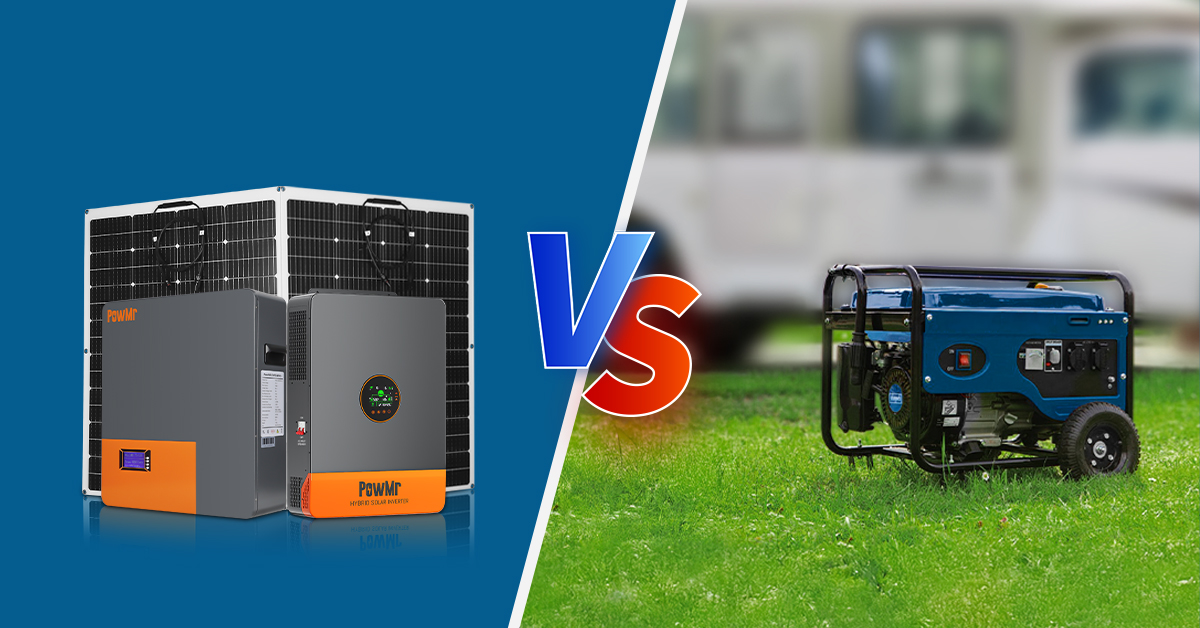
In modern society, a reliable power supply is essential for both households and businesses. Yet, power outages remain common, especially during storms, natural disasters, or grid overloads. To maintain electricity during these disruptions, people often turn to backup solutions.
The two most common options are traditional fuel-powered generators and solar power backup systems. This article compares both systems in terms of cost, reliability, environmental impact, and convenience to help you make an informed choice.
How does a solar power system work
A solar power system generates electricity using photovoltaic (PV) panels that convert sunlight into direct current (DC). The DC power flows into an inverter, which converts it into alternating current (AC) for home or business use. To ensure continuous availability, excess energy is stored in batteries, which can supply electricity at night or during cloudy weather. Once installed, the system operates automatically, requiring minimal manual intervention.
Advantages of solar power
- Long-term cost savings: Although the upfront cost is higher, solar systems have almost no fuel expenses and very low maintenance needs. Over time, they become more economical than generators.
- Environmentally friendly: Solar energy is clean, renewable, and produces zero emissions or noise, aligning with global sustainability efforts.
- Energy independence: By storing excess power in batteries, users reduce reliance on the grid and fuel supply chains, ensuring long-term resilience.
- Low maintenance: With no moving parts, solar systems require fewer repairs and less frequent servicing compared to generators.
- Hybrid compatibility: Some modern solar inverters allow you to connect a generator to their AC input, enabling both systems to work together. This ensures a reliable backup supply even during extended periods of low sunlight.
Disadvantages of solar power
- High initial investment: The cost of solar panels, inverters, and battery storage is significant upfront.
- Weather dependence: Solar systems work best in sunny conditions and rely on batteries during cloudy or rainy days, which can limit availability if storage is insufficient.
- Professional installation required: Setting up a solar backup system often involves more planning and technical expertise compared to simply purchasing a generator.
How does a backup generator work
A backup generator produces electricity by burning fuel,usually gasoline, diesel, or propane, to power an internal combustion engine. The engine turns an alternator that generates AC electricity, which can be used immediately to run appliances, machinery, or entire households. As long as fuel is available, generators can deliver continuous power, making them a dependable option for short-term emergencies.
Advantages of backup generator
- Lower upfront cost: Generators are generally more affordable to purchase than solar backup systems.
- Immediate availability: Once fueled, a generator can be used almost instantly without complex setup.
- Reliable power supply: As long as fuel is available, generators can provide steady electricity during long outages.
- Versatile applications: They can power everything from small tools to large-scale operations, depending on size and capacity.
Disadvantages of backup generator
- High operating costs: Ongoing fuel expenses and regular maintenance add up quickly, especially during extended outages.
- Environmental impact: Generators produce harmful emissions and contribute to noise pollution.
- Fuel dependence: If supply chains are disrupted, running a generator becomes difficult.
- Frequent maintenance: Engines require servicing, oil changes, and careful storage of fuel, which adds to overall upkeep.
Comparison Table
| Aspect | Generator | Solar Power System |
|---|---|---|
| Initial Cost | Low | High |
| Operating Cost | High (fuel + maintenance) | Low (almost no fuel cost) |
| Environmental | Emissions + noisy | Zero emissions + silent |
| Reliability | Stable with constant fuel supply | Depends on sunlight + battery storage |
| Ease of Use | Simple to operate, but requires refueling | Professional installation, then easy operation |
Conclusion – Solar power vs backup generator
Choosing between a solar power system and a backup generator depends on your priorities, budget, and long-term energy goals.
Generators are ideal for those seeking a low upfront cost and immediate power during emergencies. They are reliable as long as fuel is available but come with ongoing fuel expenses, maintenance requirements, and environmental concerns.
On the other hand, solar power systems offer long-term savings, environmental benefits, and energy independence. While the initial investment is higher and performance depends on sunlight and battery capacity, solar systems are low-maintenance, quiet, and can even work in tandem with a generator for hybrid backup solutions.
If you prioritize sustainability, reduced operating costs, and long-term resilience, a solar backup system is the smarter choice.
If short-term affordability and instant availability are more important, a traditional fuel-powered generator may better suit your needs.
Ultimately, the best option aligns with your energy requirements, lifestyle, and commitment to reliability and environmental responsibility.