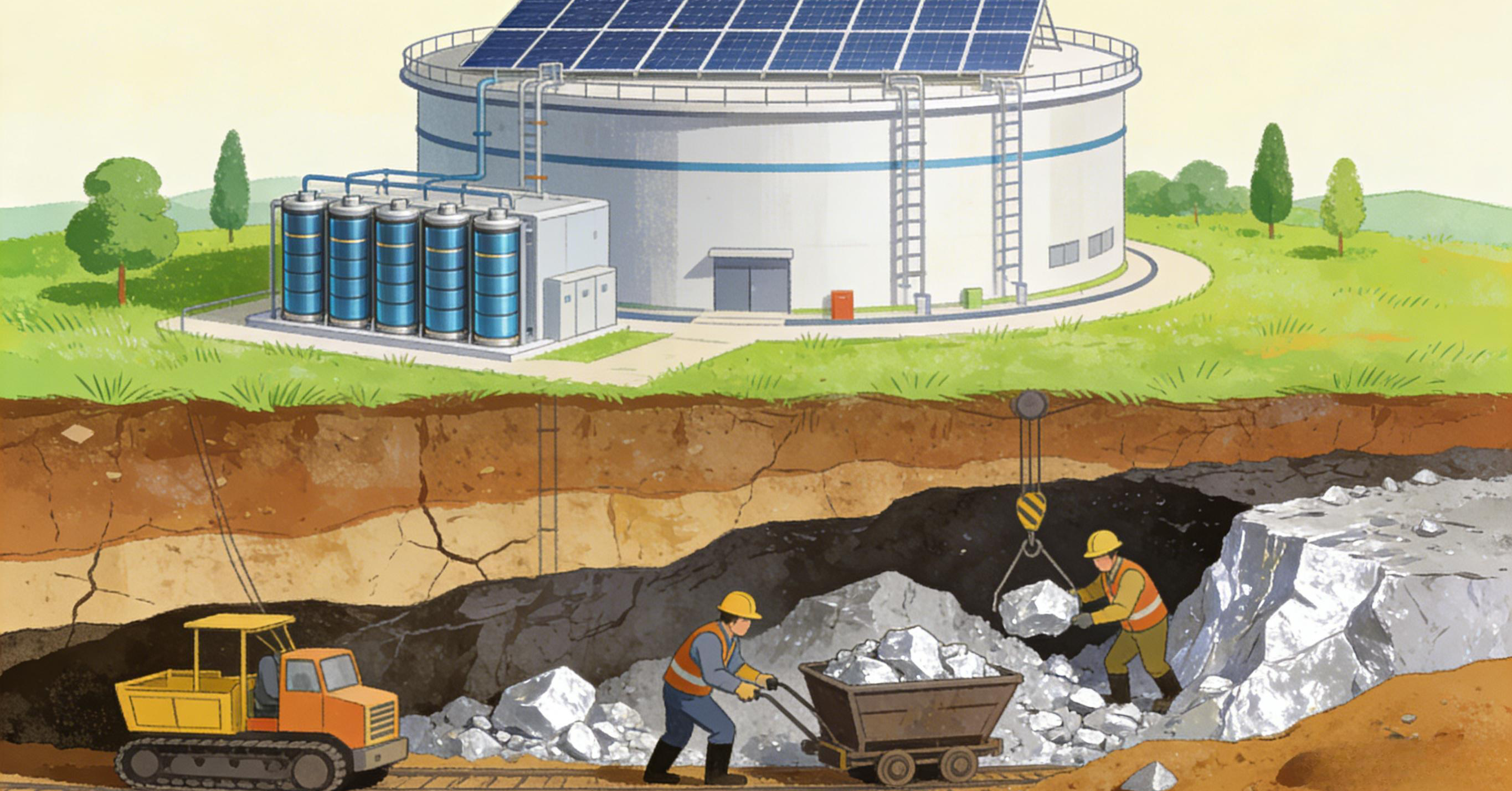
As the global transition to a zero-carbon economy accelerates, the Battery Energy Storage System (BESS) has evolved from a grid peripheral into the central pillar of resilient energy infrastructure. The physical realization of this transition is increasingly dictated by the volatile markets of upstream rare earth minerals. Critical metals—specifically Lithium, Cobalt, and Nickel—serve as the indispensable chemical foundation for the high-energy-density cells required to stabilize renewable grids. In the current economic landscape, these rare metal markets are no longer mere supply chain variables; they are the primary drivers shaping the strategic future of energy storage planning.
According to recent industry benchmarks, global demand for BESS is projected to grow by 43% to 50% through 2026, driven by aggressive decarbonization mandates (Carbon Credits, 2026). As of 2025, the energy storage sector’s share of total lithium consumption is expected to climb toward 30%, creating intense competition with the electric vehicle industry. With nickel supply chains adjusting to new geopolitical export policies and cobalt sourcing facing heightened ESG scrutiny, rare metal market volatility has become a permanent fixture of the energy landscape. Consequently, understanding the interplay between mineral scarcity and market pricing is now essential for stakeholders to navigate the long-term viability and scaling of future energy storage projects.
Key Metals in Battery Energy Storage (Nickel, Cobalt, Lithium)
The high-performance capabilities of a modern lithium battery within a Battery Energy Storage System (BESS) are fundamentally dictated by the interplay of three critical metals: Lithium, Nickel, and Cobalt. Rather than being interchangeable, these elements function as a specialized chemical “triad” where each metal governs a specific performance metric essential for grid-scale reliability.
- Lithium: Lithium serves as the primary medium for energy transfer. Due to its exceptionally low atomic weight and high electrochemical potential, lithium ions move between electrodes to store and release electricity. It is the indispensable “fuel” that enables the high charge-discharge efficiency required for lithium-ion batteries (Li-ion), particularly NMC, NCA, LFP chemistries used in grid-scale BESS, EVs, and portable electronics.
- Nickel: The presence of nickel is the main factor determining a battery’s energy density. By increasing the nickel concentration in cathode chemistries (such as NMC 622 battery, NMC 811 battery, and NCA battery), engineers can maximize the total energy storage capacity within a smaller physical footprint. This makes nickel-rich batteries the preferred choice for long-duration, high-capacity energy storage systems and electric vehicle applications.
- Cobalt: Cobalt functions as the stabilizing agent that ensures the battery’s safety and longevity. It reinforces the cathode’s crystalline structure, preventing it from degrading or collapsing under the heat and stress of repeated cycling. For the energy storage sector, where systems are expected to operate for over a decade, cobalt’s role in preventing thermal runaway and extending cycle life is vital for lithium-ion batteries used in BESS, EVs, and high-reliability electronics.
How Rare Metal Markets Affect Energy Storage
The financial landscape of the Battery Energy Storage System (BESS) is currently undergoing a structural shift. As of early 2026, the era of consistent battery price declines has stalled, as raw material markets exert unprecedented influence over project viability and grid-scale planning.
- Ending the “Low-Cost” Era: Historically, battery prices fell by nearly 90% between 2010 and 2023. However, with raw materials now accounting for 60% to 70% of total cell costs, this trend has reversed. According to BloombergNEF’s 2025 Lithium-Ion Battery Price Survey, battery raw material price surg have forced a year-on-year increase in average BESS rack prices for the first time in over a decade.
- Lithium Market Volatility: After a period of oversupply, lithium prices have entered a “rebalancing phase” in 2026. Surging demand from stationary storage—which is projected to grow at a CAGR of 30% through 2030 (IEA Critical Minerals Outlook 2025)—has pushed battery-grade lithium carbonate futures past $20,000 per metric ton ($9.00/lb). This spike directly inflates the capital expenditure (CAPEX) of utility-scale projects by an estimated 15-20%.
- The Cobalt Premium: Supply constraints have significantly impacted the cobalt price, which has rocketed to over $56,000 per metric ton (approximately $25.40 per pound) as of January 2026. The World Bank’s Commodities Markets Report highlights that new export quotas in the Democratic Republic of Congo and heightened ESG compliance costs have reintroduced a “risk premium,” making the ROI on nickel-manganese-cobalt (NMC) chemistries harder to predict.
- Nickel Pricing Pressure: The nickel price per pound has seen double-digit volatility, climbing to a 15-month high of roughly $8.20/lb ($18,100/t) in early 2026. Data from the London Metal Exchange (LME) suggests that this volatility, fueled by geopolitical shifts in Indonesia’s refining sector, creates “price discovery” challenges, preventing developers from locking in long-term power purchase agreements (PPAs).
The “butterfly effect” within rare metal markets has fundamentally redefined the clean energy landscape. A single mining disruption in a mineral-rich country or a sudden policy shift—such as the 2026 adjustments in Chinese export tax rebates or Indonesian nickel quotas—can ripple through global rare metal supply chains, driving up energy storage costs and threatening national grid decarbonization strategies.
Rare Metal Demand Across Different Energy Storage Systems
The demand for critical metals is not uniform across the energy storage landscape; it varies significantly based on the application’s scale and its integration with renewable sources. As of 2026, the energy storage sector has become the fastest-growing pillar of mineral demand, with its share of global lithium consumption projected to reach 31% this year (Mining.com, 2026).
1. Solar + Storage vs. Wind + Storage
- Solar Battery Storage: Systems paired with solar PV are currently the dominant driver of BESS deployment. Over 50% of utility-scale storage coming online in 2026 is co-located with solar (Deloitte, 2026). These systems typically favor Lithium Iron Phosphate (LFP) chemistries due to their safety and lower cost, which significantly amplifies the demand for lithium and copper but reduces the reliance on cobalt.
- Wind + Storage: Wind integration often requires longer discharge durations and higher power stability to manage the “lumpier” generation profiles of offshore and onshore wind. This often necessitates nickel-rich chemistries (like NMC) to achieve the energy density required for massive grid-balancing acts, driving sustained demand for nickel and cobalt. Additionally, wind turbines themselves require rare earth elements (like Neodymium) for their generators, creating a dual-layered mineral dependency.
2. Grid-Scale vs. Residential Storage
- Grid-Scale Battery Storage: At the utility level, the focus is on “modular, bankable blocks” that provide frequency regulation and inertia. These massive installations are the primary engine behind the 44% to 55% annual growth in storage-related lithium demand (Investing News, 2026). Because these systems operate at the megawatt-hour (MWh) scale, even small fluctuations in nickel price per pound can result in multimillion-dollar budget variances for grid planners.
- Home Battery Storage: The residential storage market focuses on energy autonomy and solar self-consumption. While individual units are small (typically 5–20 kWh), the sheer volume of solar battery storage installations in residential areas is creating a decentralized but significant pull on the supply chain. Home batteries often compete for the same high-quality lithium and aluminum as the electric vehicle (EV) industry, making residential energy security highly sensitive to global commodity market shocks.
Rare Metals and Energy Storage Planning
Diversification of Battery Chemistry: To reduce over-reliance on the “Lithium-Nickel-Cobalt” triad, grid planners are increasingly integrating alternative chemistries. While Lithium Iron Phosphate (LFP) has become the standard for cost-sensitive projects, long-duration energy storage (LDES) technologies—such as vanadium redox flow batteries—are being deployed for 6–12+ hour discharge cycles to avoid the high price volatility associated with nickel-rich cells.
EPA Regulatory Frameworks and Circularity: The EPA (Environmental Protection Agency) is playing a pivotal role in stabilizing the supply chain. In early 2026, the EPA fast-tracked a proposed rule to expand the Universal Waste Rule, specifically targeting the recycling of lithium batteries and solar panels (EPA, 2026). By mandating recovery standards, the EPA is helping create a domestic “secondary market” for rare metals, allowing planners to hedge against ore raw materials price spikes.
Strategic Stockpiling and Lifecycle Assessment: Modern Battery Energy Storage System (BESS) planning now incorporates lifecycle management from day one. National security considerations are driving strategic stockpiling initiatives to buffer against geopolitical disruptions. Furthermore, the EPA’s FY 2026-2030 Strategic Plan emphasizes “American Energy Dominance” through permitting reform and the evaluation of critical mineral recovery from contaminated sites, ensuring that grid expansion remains shielded from global commodity shocks (EPA Budget, 2026).