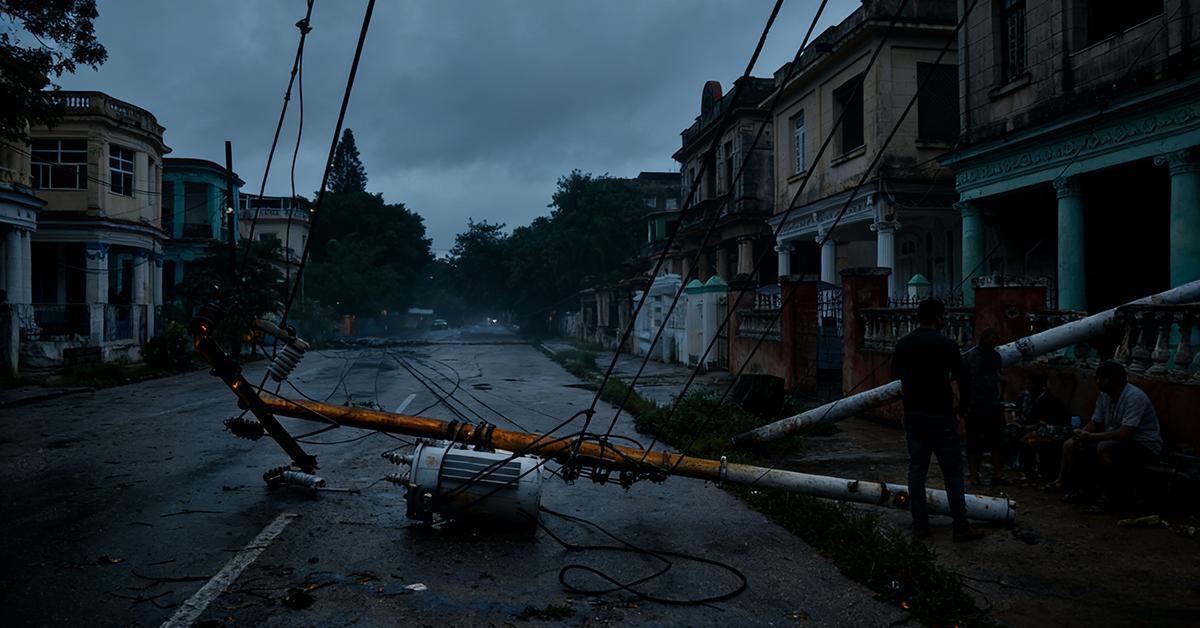
A heavy dependence on imported fossil fuels leaves a nation perpetually vulnerable, a reality Cuba learned the hard way. When the supply of crude oil necessary to fuel the nation’s power plants was cut off, the result was immediate and devastating: prolonged nationwide power outages that paralyzed daily life. The country’s inability to generate electricity had little to do with its grid infrastructure and everything to do with its reliance on a single, volatile fuel source.If a nation’s entire energy system can be paralyzed simply because crude oil stops arriving, what does that say about the fragility of modern energy dependence?
The Cascading Consequences of Energy Disruption
The moment crude oil supplies dry up and power outages begin, the economic engine of a nation sputters and stalls. Factories fall silent, perishable goods rot in storage, and small businesses without backup generators are forced to close their doors permanently. According to LSEG ship tracking data, Cuba has received only two small vessels carrying oil imports in 2026—one from Mexico in January and a liquefied petroleum gas shipment from Jamaica in February—with no crude deliveries from Venezuela, historically its main supplier (businessday.co.za).
This regional crisis is a microcosm of global vulnerability: half a world away, escalating conflict across the Middle East has effectively closed the Strait of Hormuz—the world’s most critical oil artery. Daily transits have plummeted from 120 vessels to just a handful, removing 7 million barrels per day of crude from world markets, equivalent to 7% of global demand (cnbctv18.com).
The effects begin with power outages but do not end there. As fuel supplies vanish, public transportation grinds to a halt, hospitals run out of essential medicines, and farmers watch crops wither without diesel for irrigation. Schools close. Shelves empty. The closure of a distant strait translates not just into darkness, but into hunger, untreated illness, and the slow collapse of daily life. This is the hidden cost of fossil fuel dependence: vulnerability measured in human suffering, not merely in blackouts.
The Necessity of Reducing Fossil Fuel Dependence
The recent crisis in Cuba demonstrates why reducing dependence on fossil fuel is not an environmental luxury but a strategic imperative. When the national grid collapsed and power outage swept across the island, the culprit was not aging infrastructure alone—it was the sudden disappearance of fossil fuel supply.
- The supply shock: By mid-March 2026, Cuba had gone more than three months without significant crude oil imports. LSEG ship tracking data confirmed the severity of the disruption: only two small vessels arrived in the first quarter—one from Mexico in January and a liquefied petroleum gas shipment from Jamaica in February—with no crude deliveries from Venezuela, historically its main supplier.
- The generation gap: With fuel reserves exhausted, the national grid buckled under demand. Data from Cuba’s power grid operator showed that available generation capacity fell to just 1,140 megawatts against demand of 2,347 megawatts (qazinform.com)—a deficit of more than 1,200 MW that triggered cascading power outage across the island.
- The structural lesson: The crisis was not an act of nature but a predictable consequence of energy policy. As long as a nation’s electricity system remains anchored to fossil fuel—especially imported fossil fuel—it will always be vulnerable to the next supply disruption. The only lasting protection is diversification away from the very source of the instability.
Technological Solutions for Resilient Energy Supplys
Building resilience against energy disruptions requires more than a single technology—it demands an integrated approach that spans the entire energy system, from generation to storage to end-use. The following solutions, deployed at multiple scales, can help nations and individuals weather the next crisis.
- Renewable generation: Utility-scale solar energy and wind energy projects provide the foundation for energy independence. Unlike fossil fuel plants, which require continuous fuel deliveries, wind turbines and solar panels generate electricity from freely available resources. According to the U.S. Energy Information Administration, the levelized cost of utility-scale solar PV has fallen to $30–$40 per megawatt-hour in many markets, making it competitive with or cheaper than new fossil fuel generation.
- Energy storage: Intermittent renewables become reliable resources when paired with solar batteries. At grid scale, battery arrays can smooth fluctuations in solar and wind output, store excess energy for nighttime use, and provide instantaneous backup during grid failures. At smaller scales, residential solar batteries allow homeowners to store energy generated during the day for use during evening power outages.
- Portable solutions: For maximum flexibility, portable solar power generators offer on-demand power anywhere, anytime. These units typically include foldable solar panels, a lithium-ion battery pack, and multiple output ports for charging phones, running small appliances, or powering medical devices. During the first 72 hours of a crisis—when utility crews are still assessing damage and restoring service—a portable solar power generator can mean the difference between coping and crisis.
By combining solar energy, wind energy, and solar batteries at multiple scales, nations can build an energy system that is not only cleaner but fundamentally more resilient than one dependent on a single, vulnerable fuel source.